Credit Card Management: How to Use Cards Without Paying Interest
How credit card interest and grace periods work, why minimum payments are costly, how to keep utilisation low, and habits that keep cards working for you.
A credit card can be free to use, convenient and helpful for building a credit history — or one of the most expensive ways to borrow. The difference comes down to a few habits. Here is how card interest really works and how to keep it from costing you.
How card interest and grace periods work
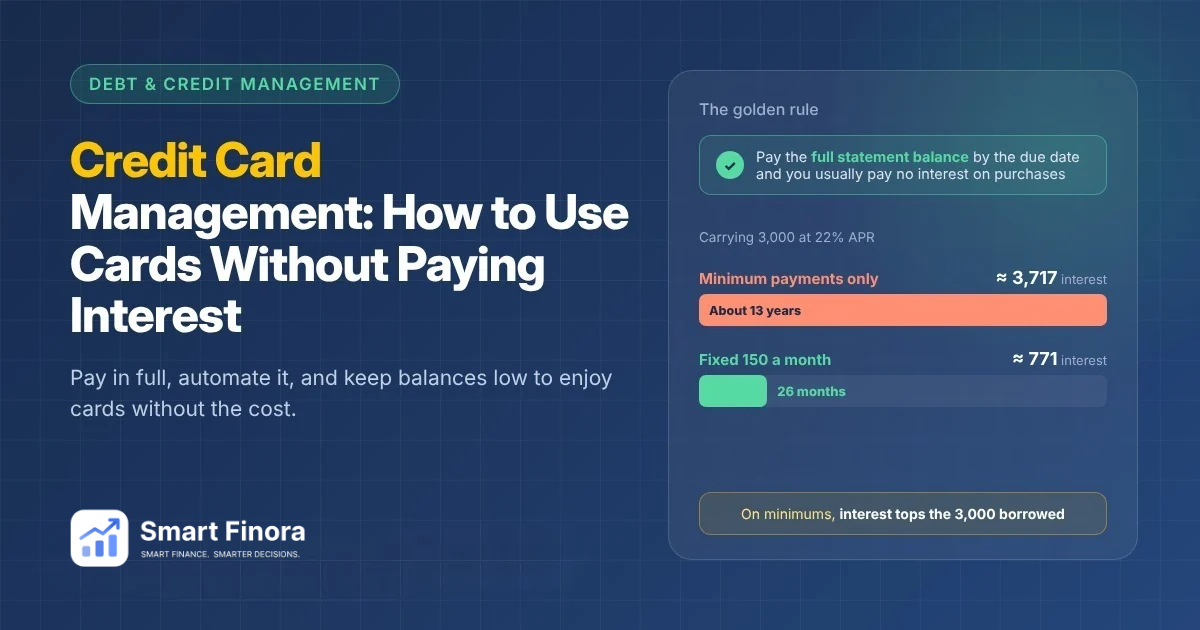
Each month you receive a statement with a balance, a minimum payment and a due date. With most cards, if you pay the full statement balance by the due date, you pay no interest on purchases — this interest-free window is often called the grace period.
Pay less than the full balance and interest is usually charged on what remains, often at 18–30% a year depending on the card and country. Cash withdrawals are typically charged interest immediately, plus a fee, with no grace period.
The minimum payment trap
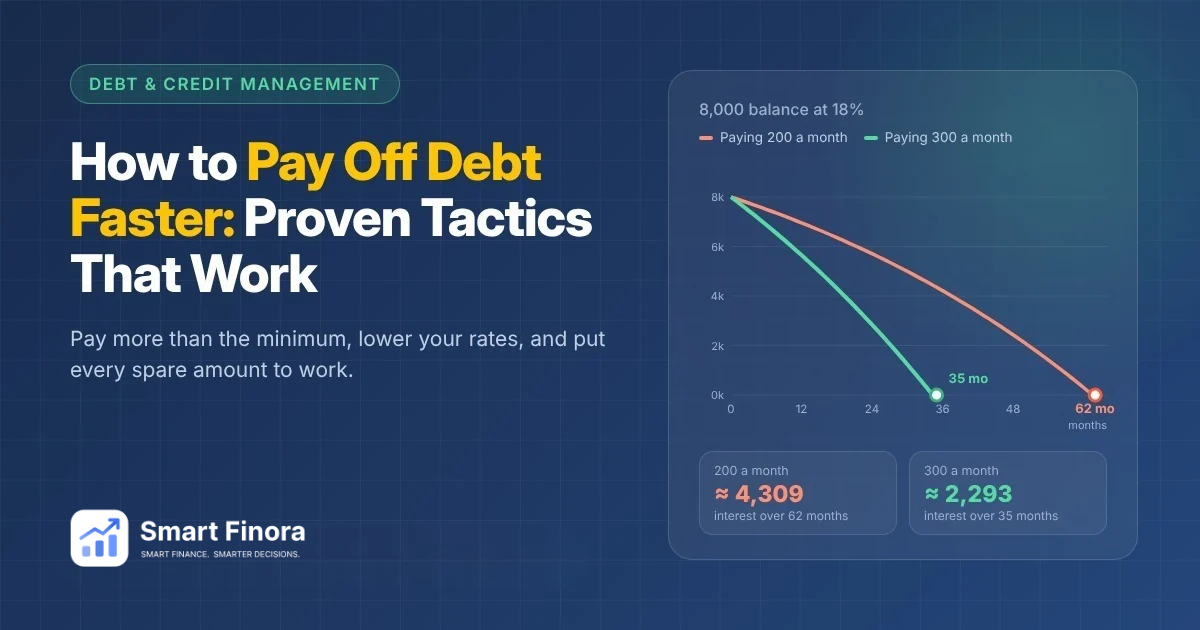
Minimum payments are designed to keep your account in good standing, not to clear the debt. Because they shrink as the balance shrinks, repayment can stretch out for years.
Example
Minimum payments vs a fixed payment
On a 3,000 balance at 22% interest, paying a minimum of 3% of the balance (at least 25) each month would take about 13 years and cost around 3,717 in interest — more than the original balance. Paying a fixed 150 a month instead clears it in 26 months with about 771 of interest.
The fix is simple: choose a fixed amount you can afford and keep paying it even as the minimum falls. Model your balance with the Loan Payoff Calculator.
Credit utilisation and your credit record
Credit utilisation is the share of your available credit limit you are using. Many scoring models treat a lower share as a sign of lower risk; keeping it below about 30% is a common guideline, and lower is often better.
Credit scoring is country-specific: different bureaus and scoring systems are used in the US, UK, India, Canada and Australia, and some countries rely less on scores than on lender checks. Our guide to what affects your credit score explains the common factors.
Habits that keep cards working for you
- Set up an automatic payment for the full statement balance, or at least a fixed amount above the minimum.
- Turn on alerts for payments due and for large transactions.
- Use one or two cards rather than many, so nothing gets forgotten.
- Treat the card like a debit card: only spend money you already have.
- Check every statement for errors or charges you don’t recognise.
Balance transfers: useful, with conditions
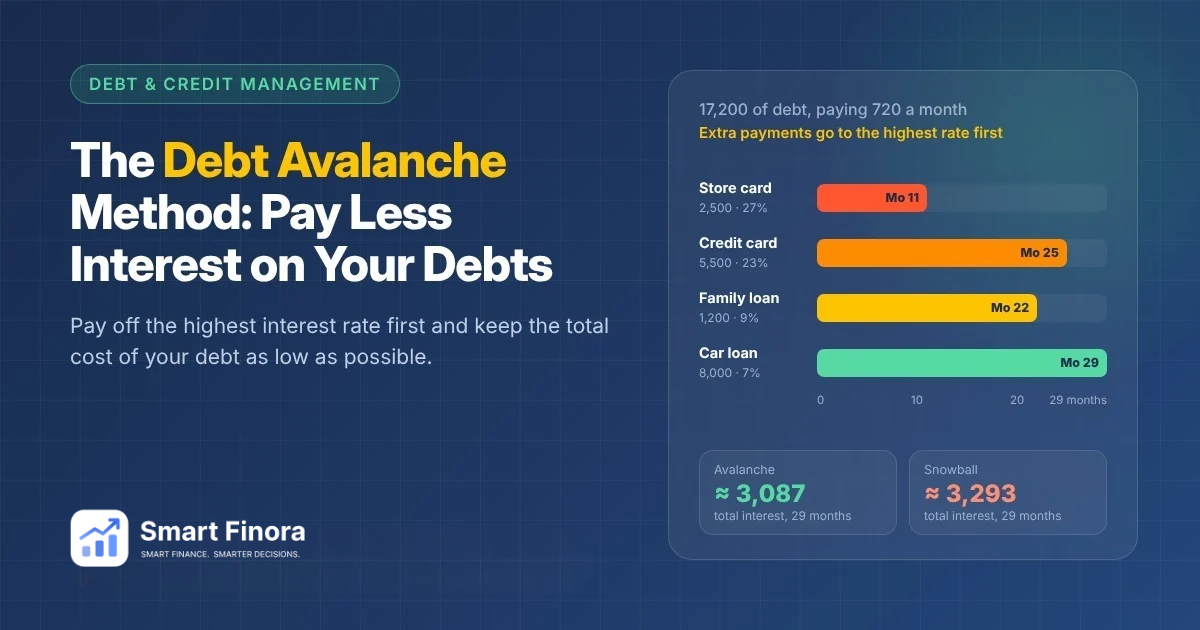
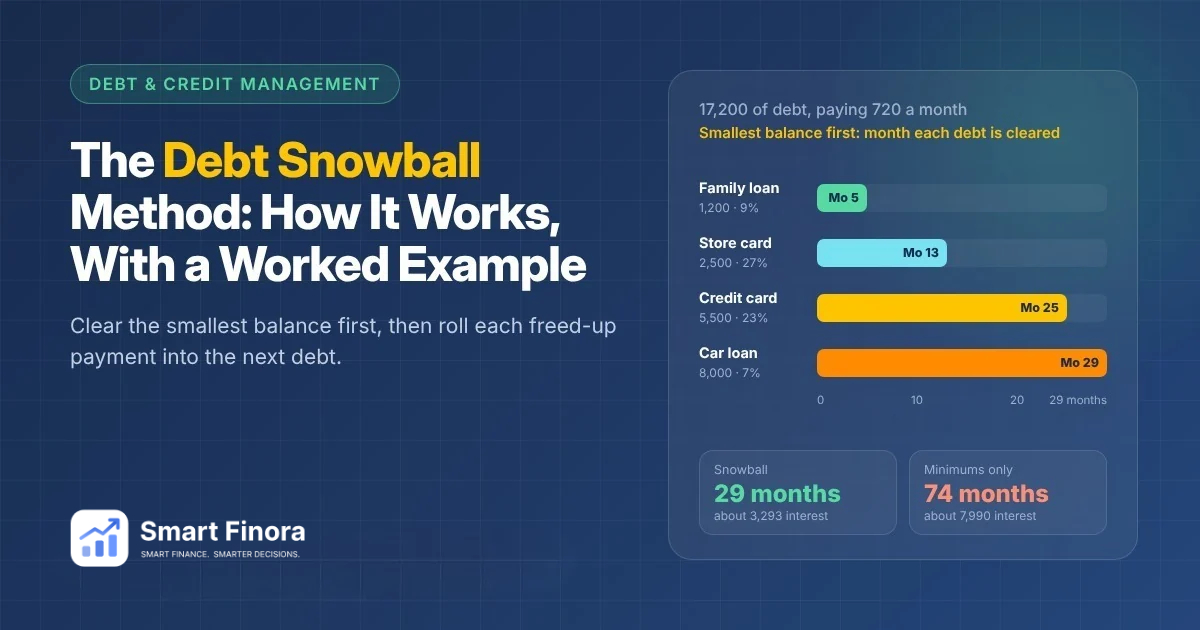
A balance transfer moves debt to a card with a low or 0% introductory rate, usually for a fee of a few percent. It can save a lot of interest if you clear the balance before the offer ends. Divide the balance by the number of months in the offer to find the monthly payment you need, and avoid new spending on the card.
Common mistakes
- Paying only the minimum. It is the most expensive way to repay.
- Withdrawing cash on a credit card. Fees and immediate interest make it very costly.
- Carrying a balance for rewards. The interest costs far more than the rewards earn.
- Missing payments. Late fees, penalty rates and damage to your credit record usually follow.
- Maxing out limits. High utilisation can lower your score even if you pay on time.
Related calculators
Frequently asked questions
Does paying in full every month hurt my credit score?
No. Paying in full shows you can manage credit responsibly and avoids interest. Scores generally reward on-time payments and low balances.
Should I close old credit cards?
It depends on your country’s scoring system. In some, closing an old card reduces your available credit and average account age. If a card has no fee, keeping it open with occasional small use is often fine.
How many credit cards should I have?
There is no ideal number. One or two cards you manage well are better than several you struggle to track.
Sources and references
- Consumer tools: credit cards — Consumer Financial Protection Bureau (US)
- Consumer information on credit and borrowing — Financial Conduct Authority (UK)
- Financial education resources — Reserve Bank of India
Figures in examples are calculated with Smart Finora’s calculators and rounded. Read how we research and review content in our editorial policy.
Related calculators
Written by
Personal finance writers and editors
The Smart Finora Editorial Team writes and maintains our finance guides. Every guide is researched from primary sources such as government agencies, central banks and regulators, checked against our calculators, and reviewed before publication under our editorial policy.