Skip to content

Debt Payoff Calculator

List every debt you want to clear — credit cards, personal loans, car finance — with its balance, interest rate and minimum payment. Add any extra you can pay each month and choose a method. The calculator shows when each debt is paid off, your debt-free date, total interest, and how the other method and minimum payments alone compare.

  • Private — runs in your browser
  • Formula explained

Enter your details

Your debts

Enter the current balance, the yearly interest rate (APR) and the minimum monthly payment from each statement.

  1. Debt 1
    $
    %
    $
  2. Debt 2
    $
    %
    $
  3. Debt 3
    $
    %
    $
$

On top of all the minimum payments. Even a small amount speeds things up.

Calculated in your browser. Your numbers are never sent or stored.

Debt-free in

2 years 3 months

Total interest
$2,273
Total repaid
$19,773
Monthly payment (all debts)
$735
Interest saved vs. snowball
$296
Interest saved vs. minimum payments only
$2,290

Each month you pay $735 in total. When a debt is cleared, its minimum payment rolls into the next debt on the list.

Paying only the minimums would take 4 years 6 months because the money freed by each cleared debt would not be reused.

Total debt remaining

Payoff order

Swipe the table sideways to see every column.

OrderDebtBalanceRatePaid off afterInterest paid
1Credit card$4,50022.9%1 year 4 months$749
2Personal loan$3,20012%1 year 9 months$458
3Car loan$9,8007.5%2 years 3 months$1,066

How to use the Debt Payoff Calculator

  1. 1Choose your currency.
  2. 2Enter each debt’s balance, interest rate and minimum payment. Use “Add debt” for more.
  3. 3Enter the extra amount you can pay every month.
  4. 4Pick avalanche or snowball, then switch to the other method to compare.

Formula

Each month: Balance = Balance × (1 + APR ÷ 12) − Payment

Monthly budget
sum of all minimum payments + extra payment (stays constant)
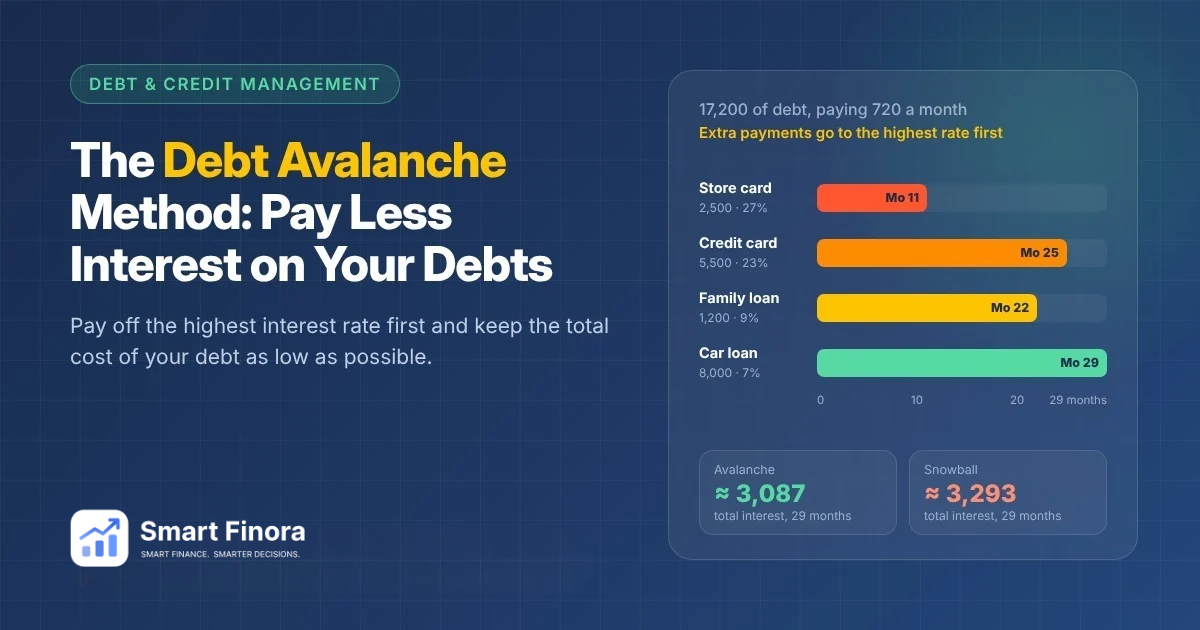
Avalanche
extra money goes to the highest interest rate first
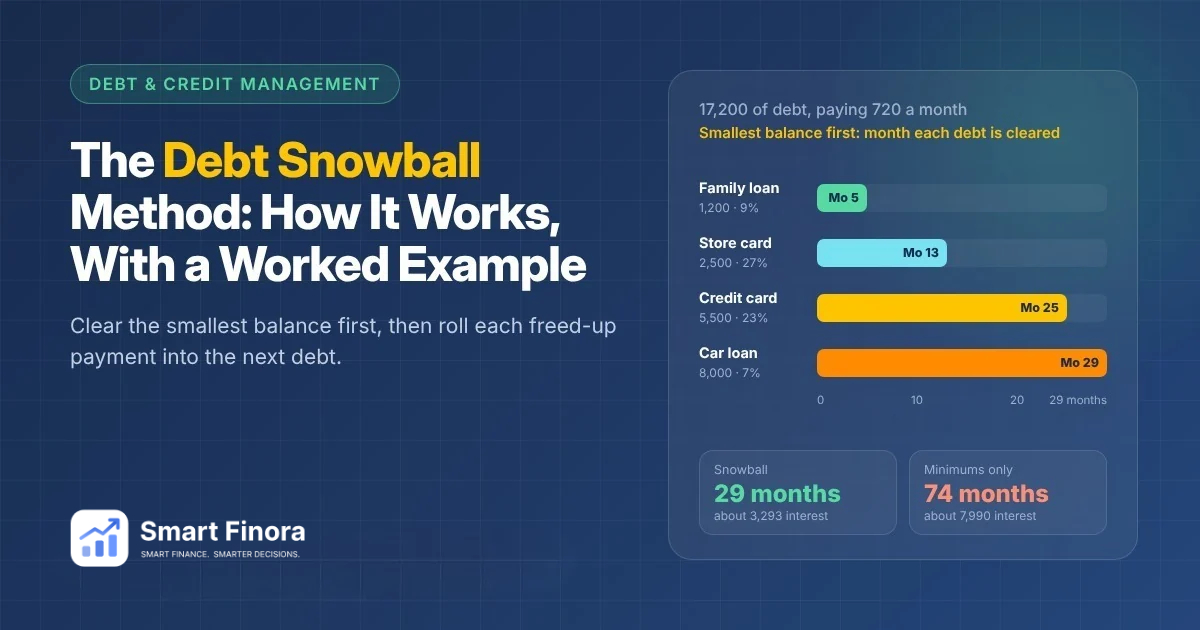
Snowball
extra money goes to the smallest balance first

The calculator simulates every month: interest is added to each balance, every minimum is paid, and whatever is left of the monthly budget goes to the target debt. When a debt reaches zero its payment is not spent elsewhere — it joins the attack on the next debt. Avalanche always costs the least interest; snowball clears individual debts sooner, which many people find motivating.

Example calculation

Three debts totalling $15,200 have minimum payments of $440 a month. Adding $150 and following the avalanche order clears everything in 2 years 7 months, with $2,865 of interest — $2,152 less than paying only the minimums.

Assumptions and limitations

  • Interest rates and minimum payments stay the same until each debt is cleared. In reality, card minimums often fall as the balance falls; keeping your payment fixed is what makes this plan work.
  • No new borrowing or fees are added.
  • Interest is charged monthly at APR ÷ 12.

Frequently asked questions

Which is better: debt snowball or avalanche?

Avalanche saves the most money because the most expensive debt goes first. Snowball pays off small debts quickly, which helps many people stay motivated. If the interest difference shown is small, choose the method you will stick with.

Should I include my mortgage?

Usually not. Mortgages have long terms and low rates; most debt plans focus on consumer debt such as cards, overdrafts, personal loans and car finance.

What if my minimum payment barely covers the interest?

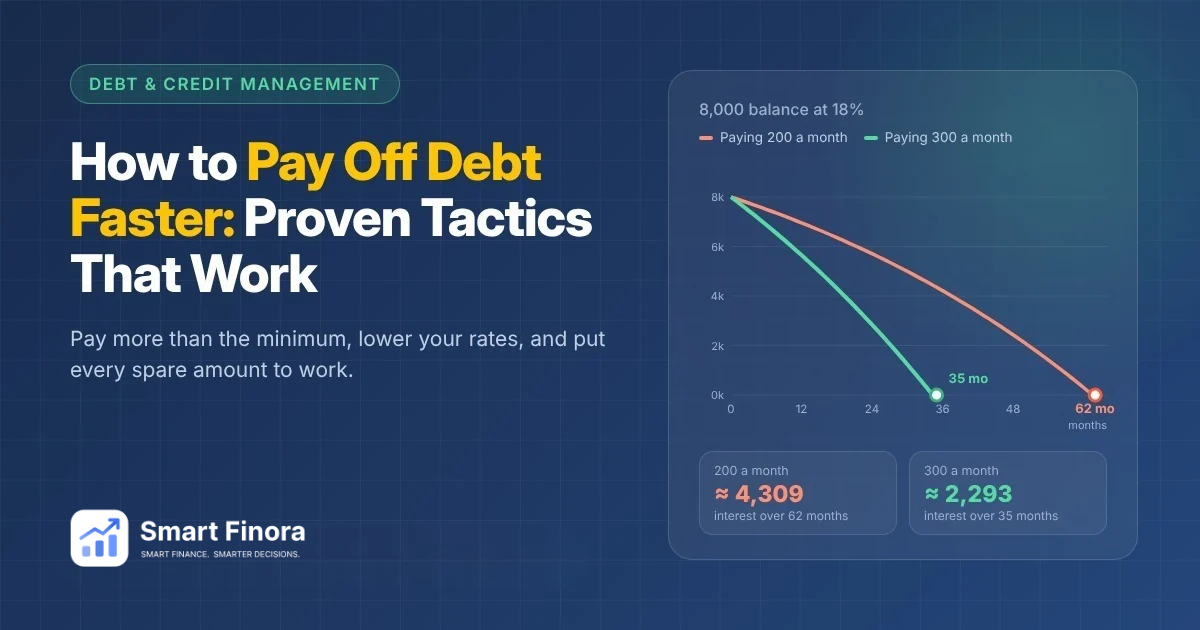
Then that debt barely shrinks. Adding even a small extra payment, or moving the balance to a lower rate, makes a large difference — try both in the calculator.

What happens to the payment when a debt is paid off?

It rolls over. Your total monthly payment stays the same, so the next debt receives its own minimum plus everything that was going to the cleared debt.

Learn more

Debt & Credit Management

How to Pay Off Debt Faster: Proven Tactics That Work

Practical ways to pay off debt faster: pay more than the minimum, choose a payoff method, lower your interest rates, use windfalls and stop new borrowing.

3 min read