Income & Lifestyle
Managing Your First Salary: A Simple Plan for New Earners
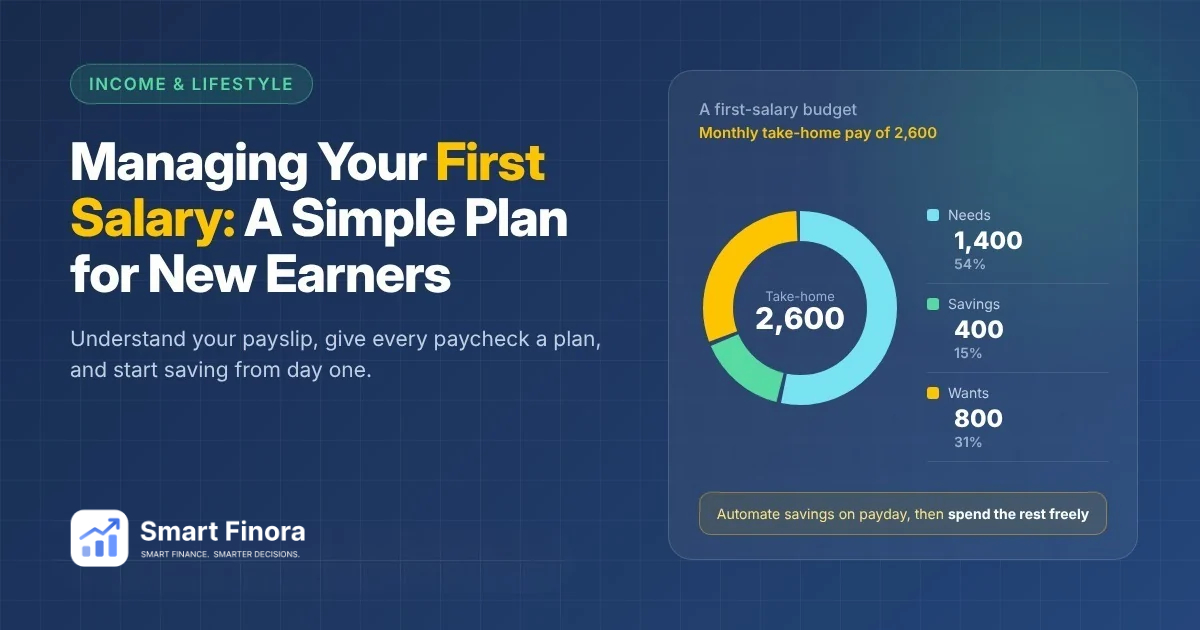
What to do with your first salary: understand your payslip, set up a simple budget, start saving and a pension, build credit carefully and avoid early traps.
3 min read
Personal finance · 5 guides
How you handle income — a first paycheck, a pay rise, extra money from a side project — shapes your finances for years. These guides cover the decisions and habits that turn earning into lasting progress.
Income & Lifestyle
What to do with your first salary: understand your payslip, set up a simple budget, start saving and a pension, build credit carefully and avoid early traps.
3 min read
How to plan a side income: work out your true hourly earnings after costs and tax, keep records, check tax rules, and decide what to do with the extra money.
2 min read
Income & Lifestyle
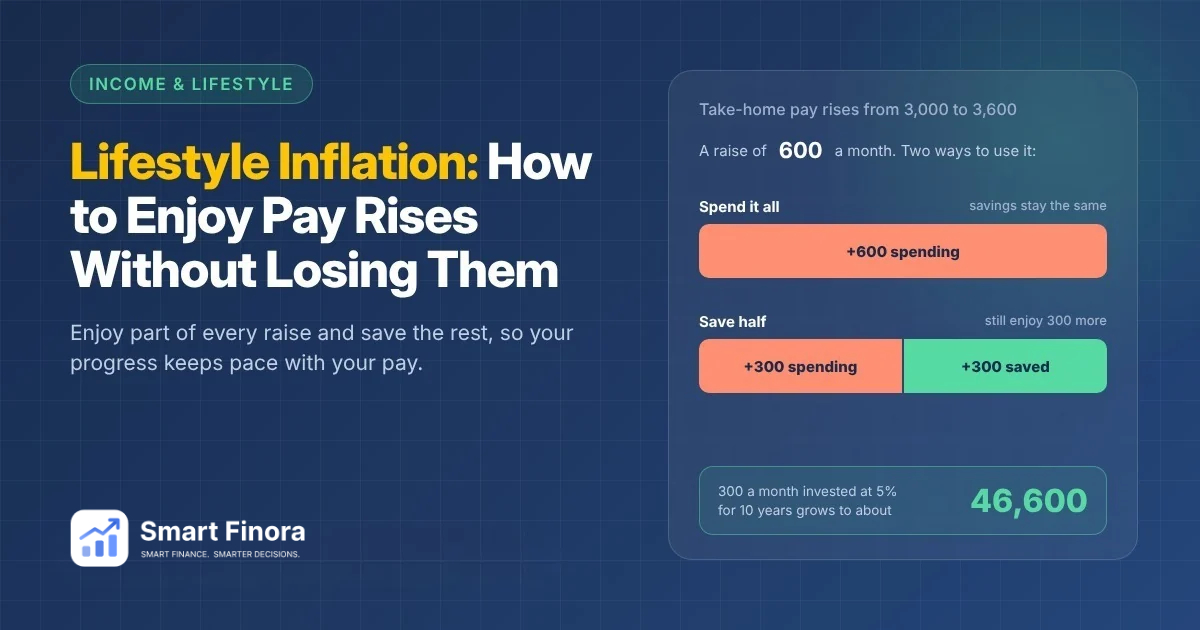
What lifestyle inflation is, why it happens, what it costs over time, and simple strategies to enjoy rising income while still growing your savings.
2 min read
How to build financial habits that stick: start small, automate, use weekly, monthly and yearly money check-ins, and the habits that matter most.
2 min read
Income & Lifestyle
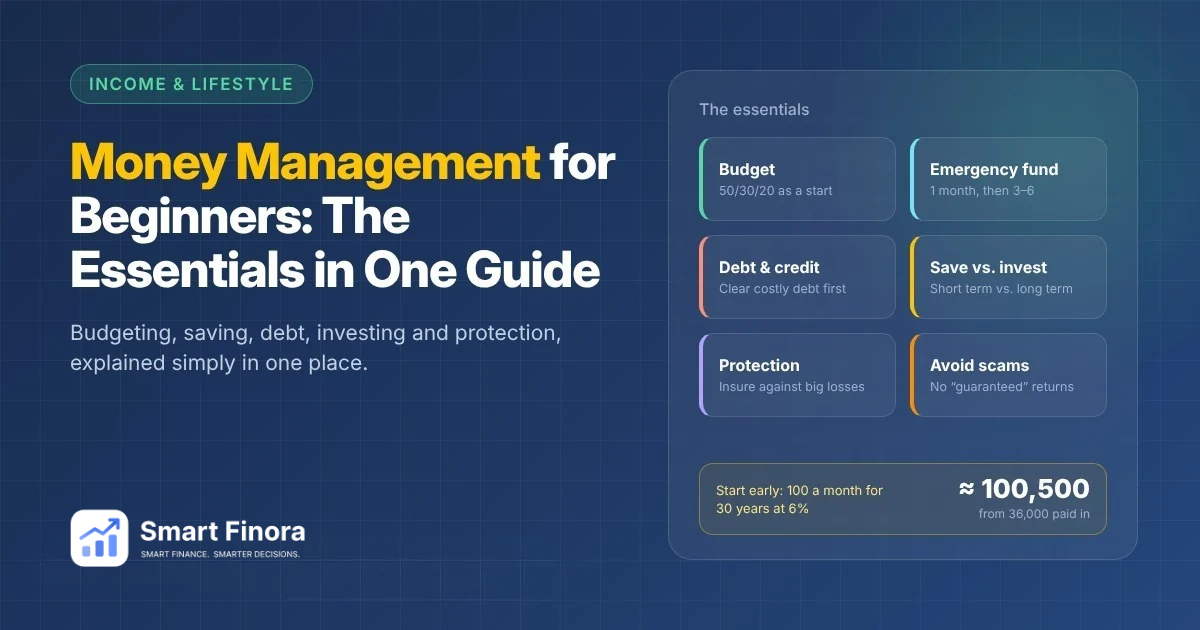
A beginner’s guide to managing money: the right order of priorities, budgeting, emergency funds, debt, credit, investing basics, insurance and avoiding scams.
3 min read
Run your own numbers — free, private and in six currencies.
Work out what share of your income you save — including pension contributions — and what it means long term.
Estimate take-home pay after income tax and payroll deductions.
Split your take-home pay into needs, wants and savings — and compare it with what you spend now.
Aim for at least 10–20% of take-home pay, including any retirement contributions. If that is not possible yet, start smaller and raise the rate with every pay rise.
In most countries, yes, once it goes above certain limits. Rules differ, so check your tax authority’s guidance on self-employment or extra income and set money aside as you earn it.