Saving & Emergency Funds
How to Build Savings From Scratch
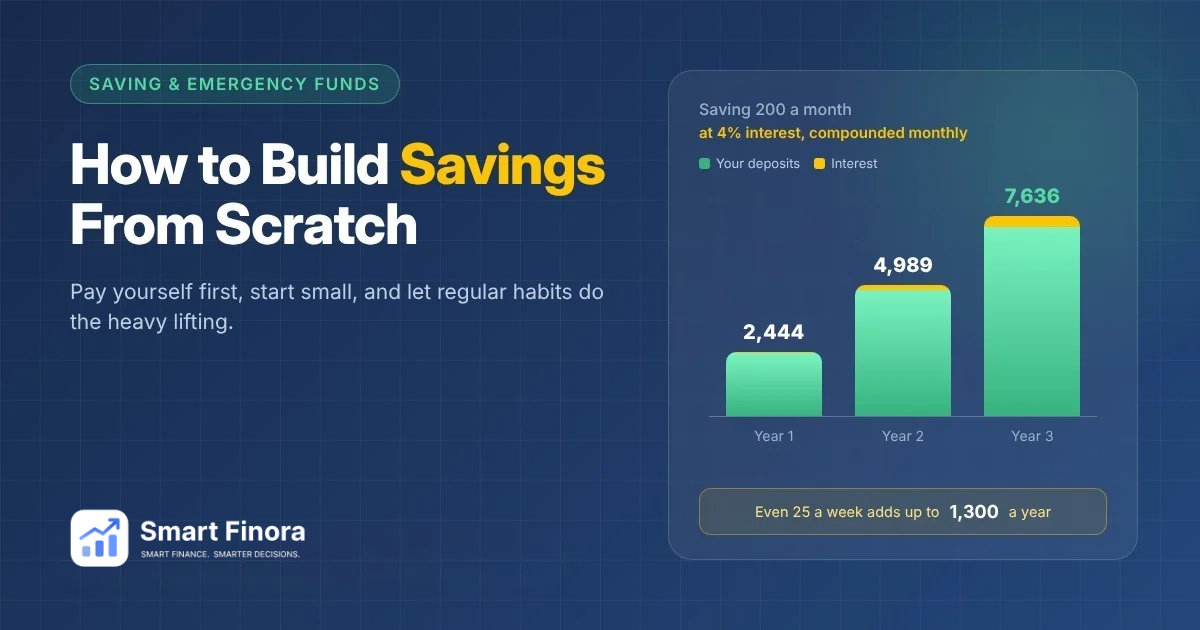
A step-by-step way to start saving when you have little or nothing put aside: pay yourself first, start small, choose the right account and keep going.
3 min read
Your savings rate — the share of income you keep rather than spend — is one of the strongest predictors of long-term financial security. Enter your take-home pay and what you save, plus any retirement contributions taken from your salary. The calculator shows your savings rate and an estimate of how long that rate could take you to financial independence.
23.6%
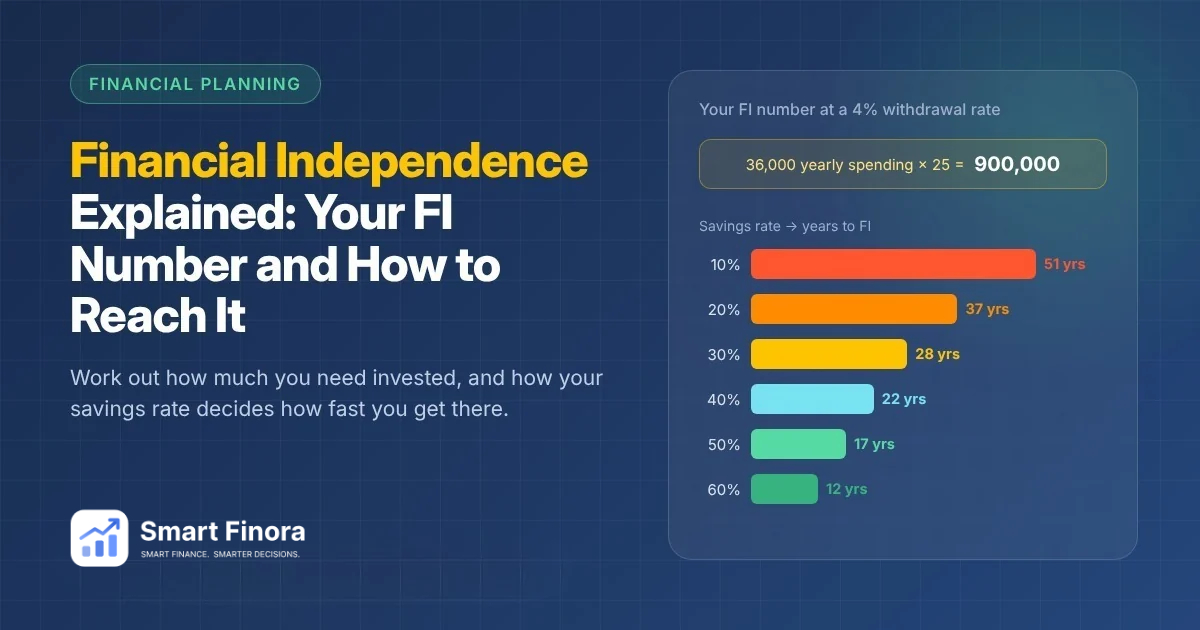
The time estimate assumes you start from zero, earn a 5% return after inflation, and stop working when savings reach 25 times your yearly spending (the “4% rule”). It is a rough guide, not a forecast.
Swipe the table sideways to see every column.
| Savings rate | Time to financial independence |
|---|---|
| 5% | 65 years 9 months |
| 10% | 51 years 4 months |
| 15% | 42 years 10 months |
| 20% | 36 years 9 months |
| 25% | 31 years 11 months |
| 30% | 28 years |
| 40% | 21 years 8 months |
| 50% | 16 years 7 months |
| 60% | 12 years 5 months |
| 70% | 8 years 10 months |
Savings rate = Total saved ÷ Total pay × 100
Contributions taken from your salary never reach your bank account, so they are added to both sides; otherwise the rate would understate what you save. The time-to-independence estimate uses the fact that a higher savings rate works twice: you invest more and you need less, because you have learned to live on less.
Taking home $3,000 and saving $450 of it looks like a 15% savings rate. Adding $150 of pension contributions from salary and $150 from the employer, $750 of $3,300 total pay is saved — a savings rate of 22.73%.
10–15% is a common target for retirement saving; 20% is the savings share in the 50/30/20 rule. People aiming to retire early often save 40% or more. Any positive rate is a foundation to build on.
Including them shows the full picture of money being put aside for your future. Leave them out if you want a stricter measure of your own effort.
This calculator uses take-home pay plus any contributions deducted before you are paid, which reflects money you actually control. Calculations on gross salary give a lower percentage.
Saving & Emergency Funds
A step-by-step way to start saving when you have little or nothing put aside: pay yourself first, start small, choose the right account and keep going.
3 min read
Financial Planning
What financial independence means, how to calculate your FI number with the 4% rule, why your savings rate matters most, and the risks to plan for.
3 min read
Income & Lifestyle
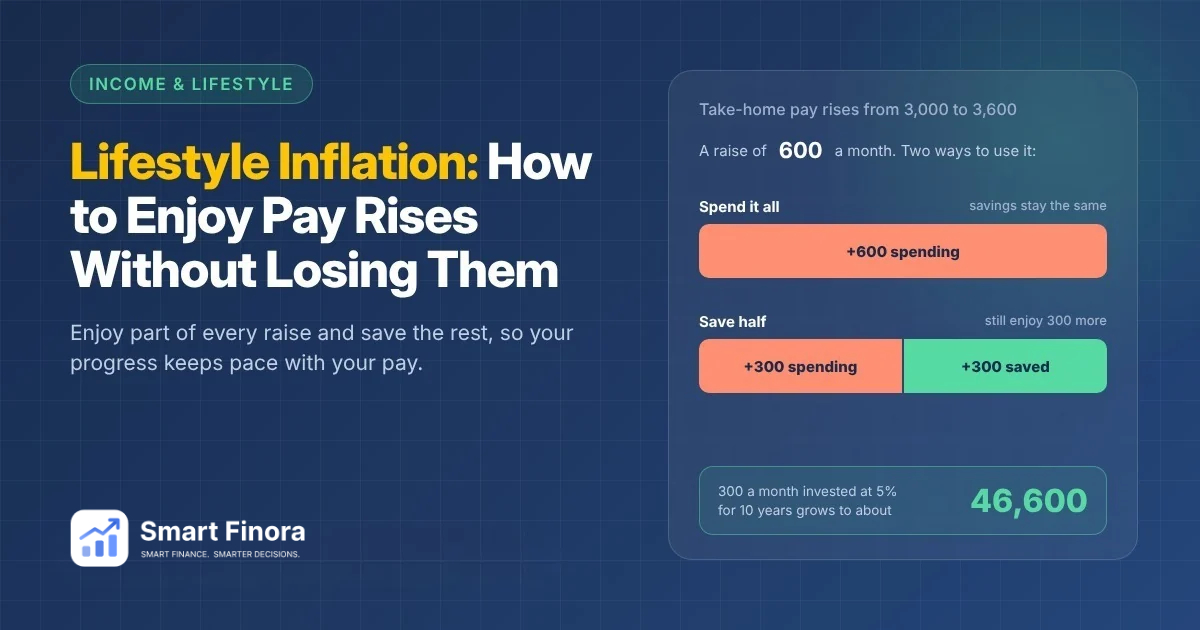
What lifestyle inflation is, why it happens, what it costs over time, and simple strategies to enjoy rising income while still growing your savings.
2 min read