Financial Planning
Financial Independence Explained: Your FI Number and How to Reach It
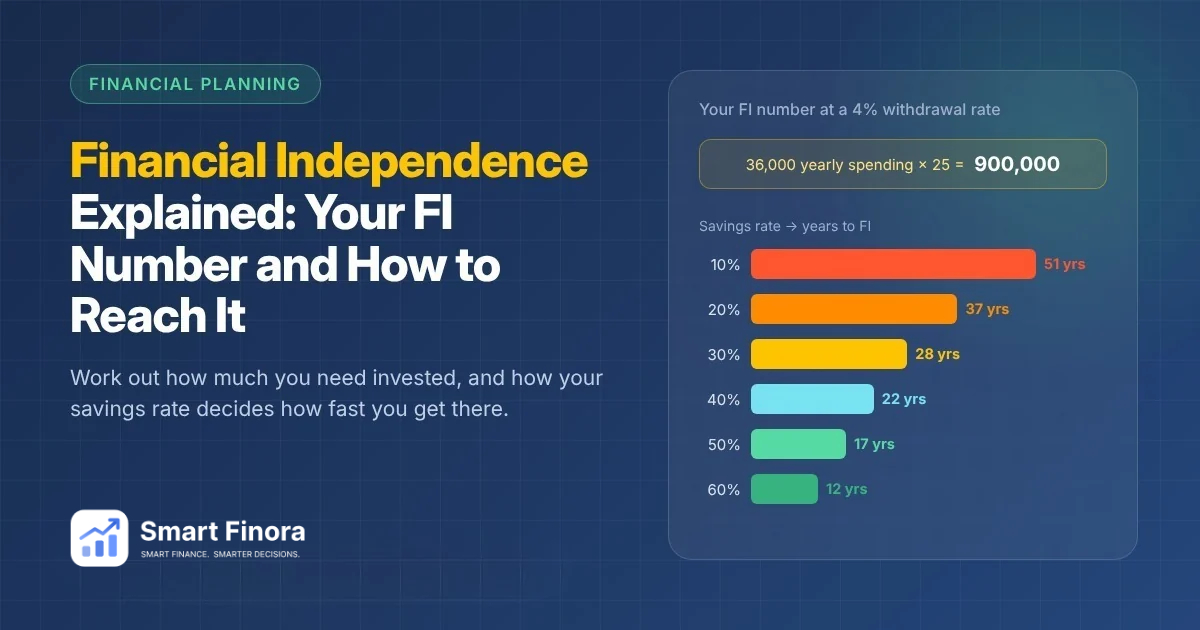
What financial independence means, how to calculate your FI number with the 4% rule, why your savings rate matters most, and the risks to plan for.
3 min read
Financial independence means having enough invested that your portfolio can cover your living costs without a paycheck. Enter what you spend in a year, what you have invested and what you add each year. The calculator works out your target — your FI number — and roughly when you could reach it. All figures are in today’s money.
$1,000,000
The withdrawal-rate idea comes mainly from research on US stock and bond returns. Returns, inflation, taxes and pension systems differ by country, so build in a margin — for example a lower withdrawal rate or extra savings.
Swipe the table sideways to see every column.
| Year | Invested | Target |
|---|---|---|
| 1 | $72,954 | $1,000,000 |
| 2 | $97,056 | $1,000,000 |
| 3 | $122,363 | $1,000,000 |
| 4 | $148,936 | $1,000,000 |
| 5 | $176,837 | $1,000,000 |
| 6 | $206,133 | $1,000,000 |
| 7 | $236,894 | $1,000,000 |
| 8 | $269,193 | $1,000,000 |
| 9 | $303,107 | $1,000,000 |
| 10 | $338,717 | $1,000,000 |
FI number = Yearly spending ÷ Withdrawal rate
Using a real (after-inflation) return keeps every figure in today’s money, so the target and the projection can be compared directly. The time to independence is the first month the projected investments reach the FI number. Lower spending helps twice: it lowers the target and leaves more to invest.
Spending $30,000 a year means an FI number of $750,000 at a 4% withdrawal rate. Starting with $20,000 and investing $15,000 a year at a 5% real return, the target is reached in about 24 years 1 month — around age 56.
It is a guideline from historical US data: withdrawing 4% of a balanced portfolio in the first year, then adjusting for inflation, has usually lasted at least 30 years. For longer retirements or other markets, many planners use 3–3.5%.
Not in the invested total, because it does not produce income unless you sell or rent it. Owning your home outright does lower your yearly spending, which lowers your FI number.
No. Many people use financial independence as freedom to work less, change careers or take time off, rather than retiring completely.
If you expect a state or workplace pension, subtract it from your yearly spending for the years it will be paid. Your portfolio then only needs to cover the rest.
Financial Planning
What financial independence means, how to calculate your FI number with the 4% rule, why your savings rate matters most, and the risks to plan for.
3 min read
Financial Planning
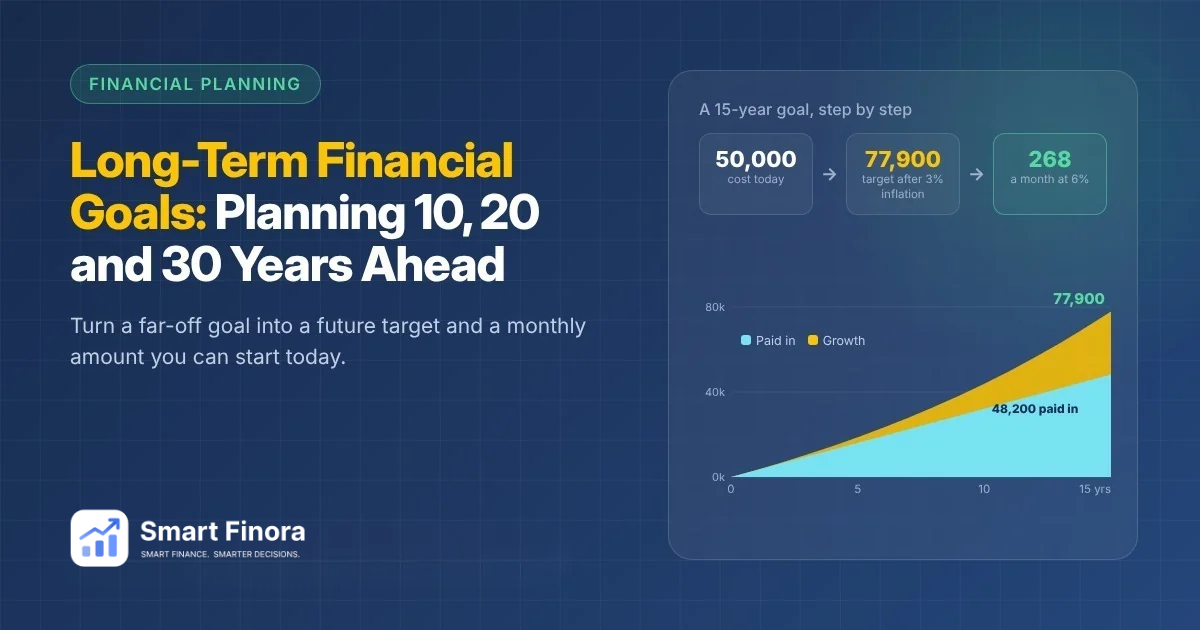
How to set and fund long-term financial goals such as retirement, a home or education: adjust for inflation, work out the monthly saving and review.
2 min read
Retirement Planning
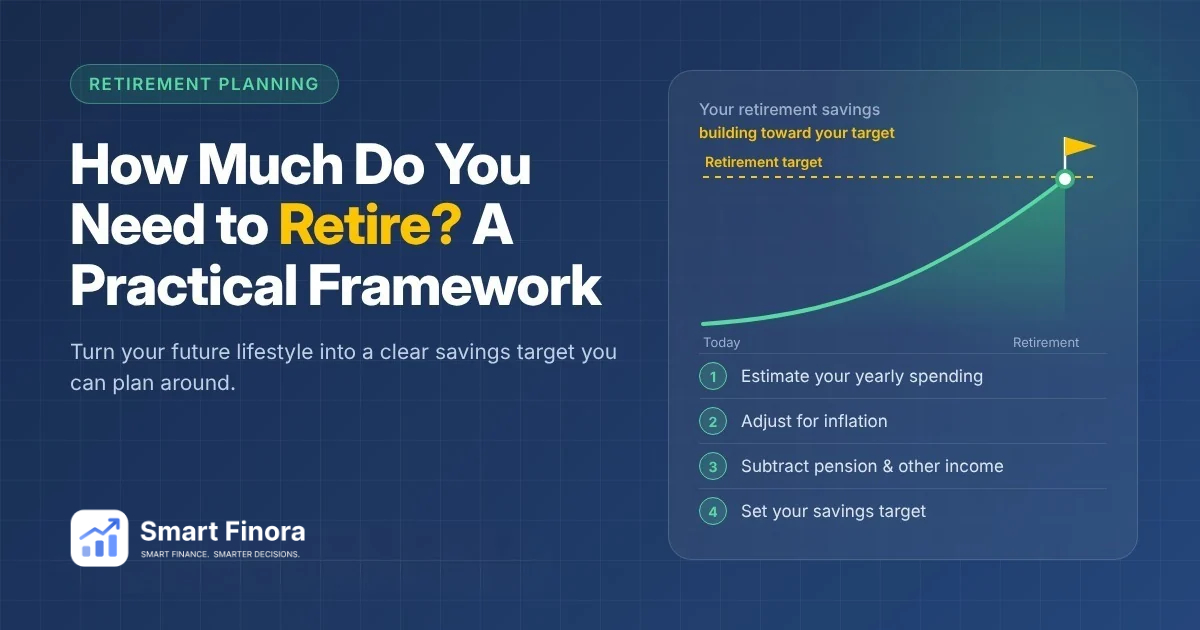
A step-by-step way to estimate your retirement number: target income, pensions, the 4% rule, inflation and what to do if your projection falls short.
3 min read