
Everyday Money Management
Managing Monthly Bills: A Simple System to Never Miss a Payment
Set up a simple bill system: list every bill, line due dates up with payday, use a bills account and autopay safely, and cut costs at every renewal.
3 min read
Personal finance · 5 guides
Most financial progress happens in ordinary weeks: bills paid on time, a grocery budget that holds, purchases you do not regret. These guides share practical systems for the everyday side of money.
Everyday Money Management
Set up a simple bill system: list every bill, line due dates up with payday, use a bills account and autopay safely, and cut costs at every renewal.
3 min read
Everyday Money Management
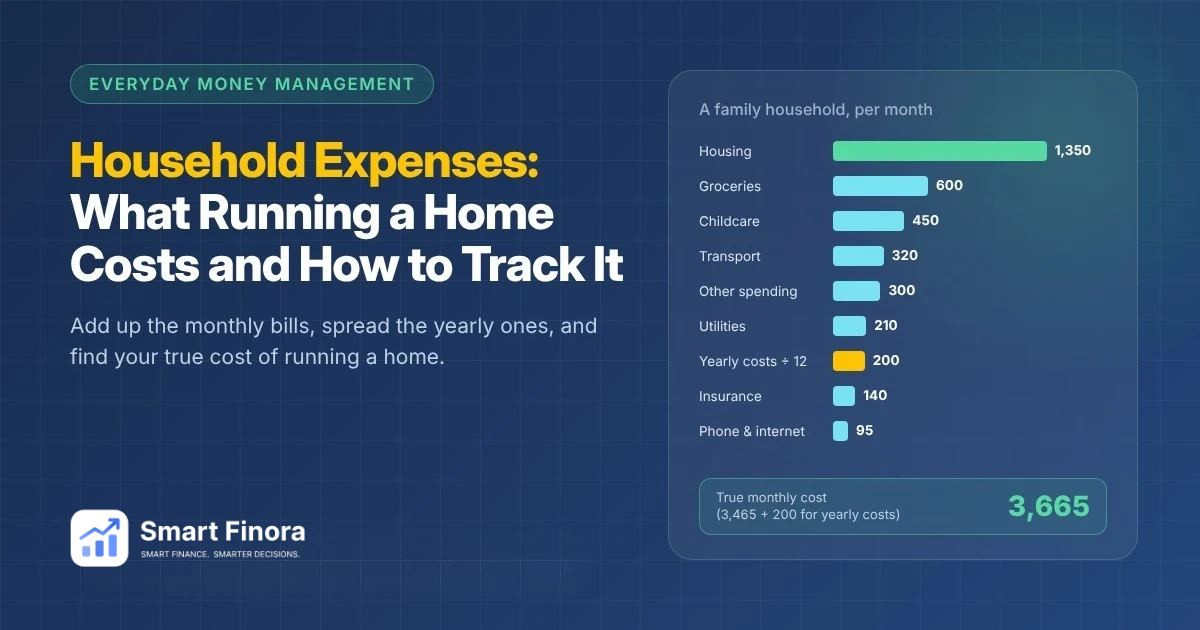
The main categories of household expenses, how to work out your true monthly cost including yearly and seasonal bills, and ways to share and reduce costs.
3 min read
How to set a realistic grocery budget, plan meals, shop with a list, compare unit prices and cut food waste — so you spend less without eating worse.
2 min read
Practical smart shopping tips: think in cost per use, wait before buying, compare prices, buy second-hand or refurbished and avoid traps like fake discounts.
2 min read

Everyday Money Management
How to reduce daily expenses without feeling deprived: track a week, target repeated costs, swap rather than give up, and send every saving to a goal.
2 min read
Run your own numbers — free, private and in six currencies.
Find your true monthly cost of living, including bills you pay only once or twice a year.
Build a monthly budget and compare it with the 50/30/20 rule.
Split your take-home pay into needs, wants and savings — and compare it with what you spend now.
Review recurring costs first — subscriptions, phone and internet plans, insurance renewals — because one change saves money every month without daily effort.
Track one or two weeks of spending to see the pattern, then set a weekly limit for the category and use a separate card or pot for it.