Personal Finance
How to Build a Monthly Budget You’ll Actually Stick To
A practical, step-by-step method for building a monthly budget: track real spending, choose a framework like 50/30/20, and keep it going without burning out.
4 min read
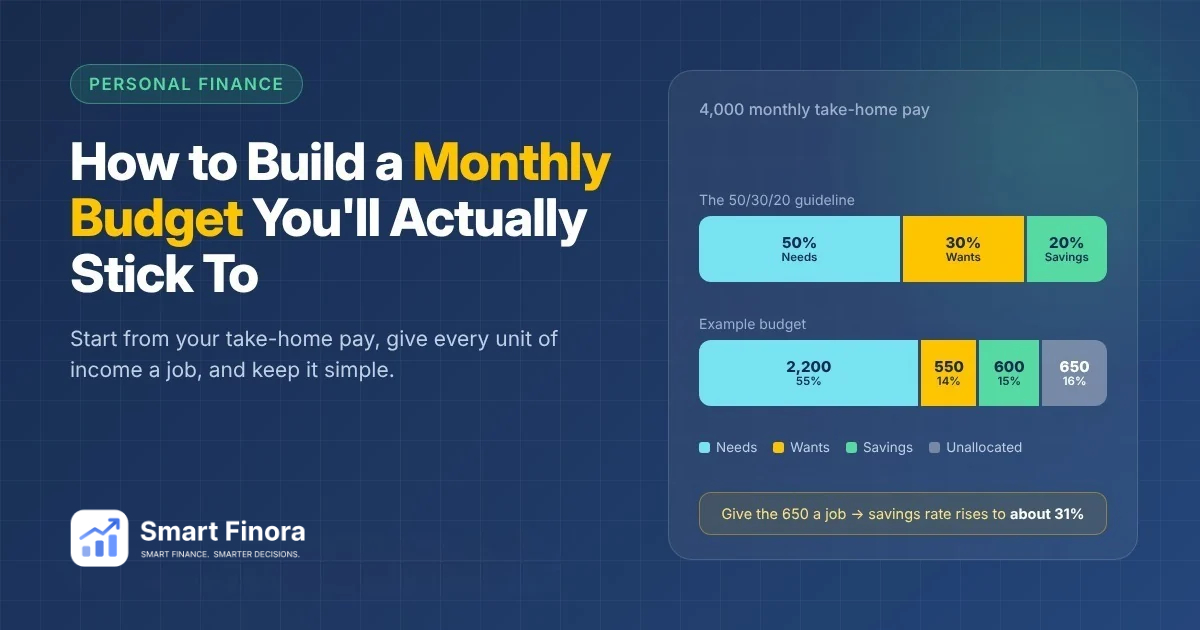
A budget shows where your money goes so you can direct it where it matters. Enter your monthly take-home pay and expenses. The calculator totals them, shows what is left, and compares your spending with the popular 50/30/20 guideline: 50% needs, 30% wants, 20% savings and debt repayment.
$740
Consider giving every unallocated amount a job — for example, your emergency fund or a savings goal.
Swipe the table sideways to see every column.
| Category | Your amount | Share of income | Guideline | Difference |
|---|---|---|---|---|
| Needs (50%) | $2,350 | 58.75% | $2,000 | $350 |
| Wants (30%) | $510 | 12.75% | $1,200 | -$690 |
| Savings & debt (20%) | $400 | 10% | $800 | -$400 |
Left over = Income − (Needs + Wants + Savings & debt)
The 50/30/20 rule is a simple starting framework, not a strict law. In high-cost cities, needs often exceed 50%; the point is to see the trade-offs clearly.
On $4,000 a month, needs of $2,200 are 55% of income, wants of $550 are about 14%, and saving $600 is 15%. That leaves $650 unallocated, which could lift savings above the 20% guideline.
It suggests spending about 50% of take-home pay on needs, 30% on wants, and putting 20% toward savings and paying down debt.
Costs you must pay to live and work: housing, utilities, groceries, transport, insurance and minimum loan payments.
That is common where housing is expensive. Aim to protect your savings rate by trimming wants, and review big fixed costs when contracts renew.
Personal Finance
A practical, step-by-step method for building a monthly budget: track real spending, choose a framework like 50/30/20, and keep it going without burning out.
4 min read
Credit Cards & Credit Scores
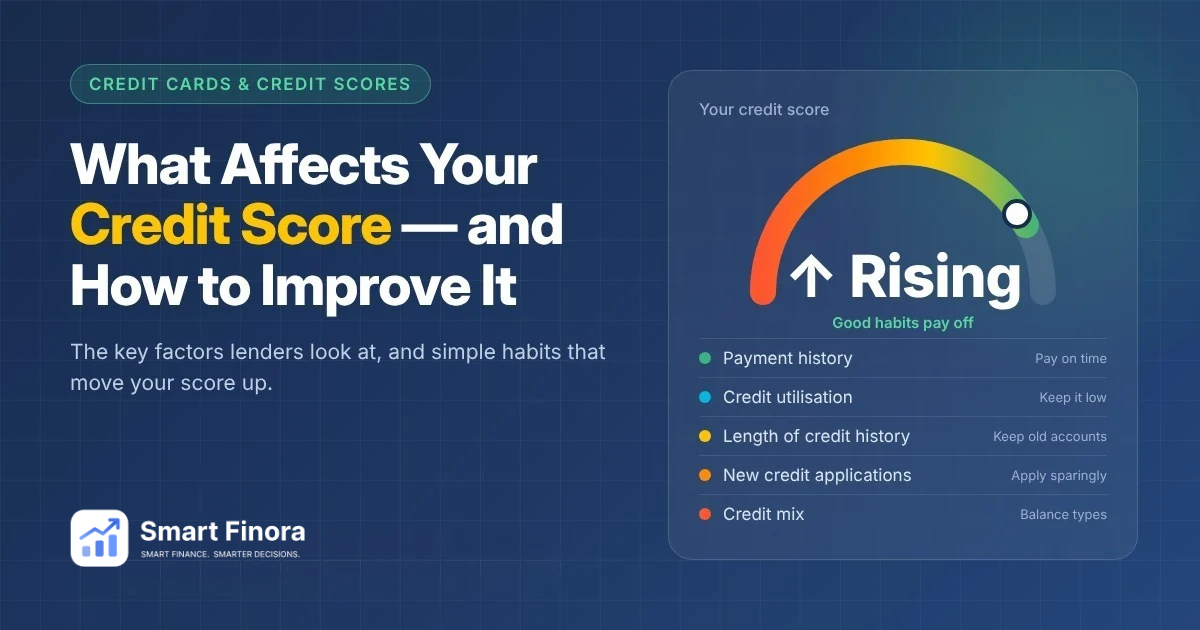
The main factors behind credit scores, how credit card balances and utilization affect them, and practical steps to build or rebuild your credit over time.
3 min read
Income & Lifestyle
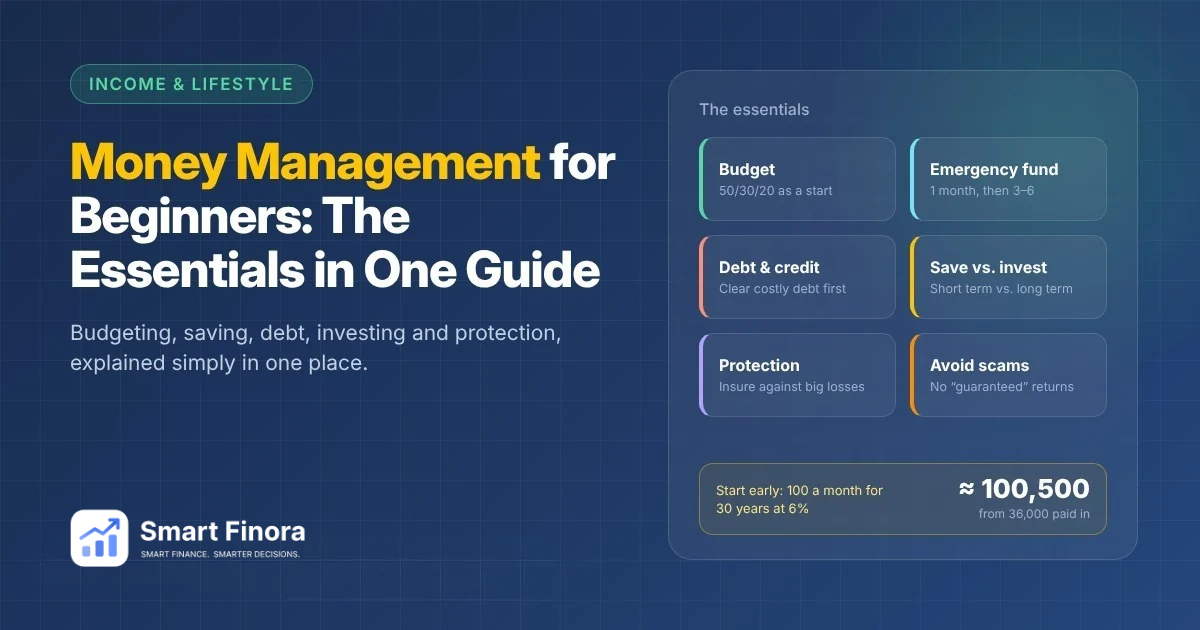
A beginner’s guide to managing money: the right order of priorities, budgeting, emergency funds, debt, credit, investing basics, insurance and avoiding scams.
3 min read