Saving & Budgeting
How Big Should Your Emergency Fund Be?
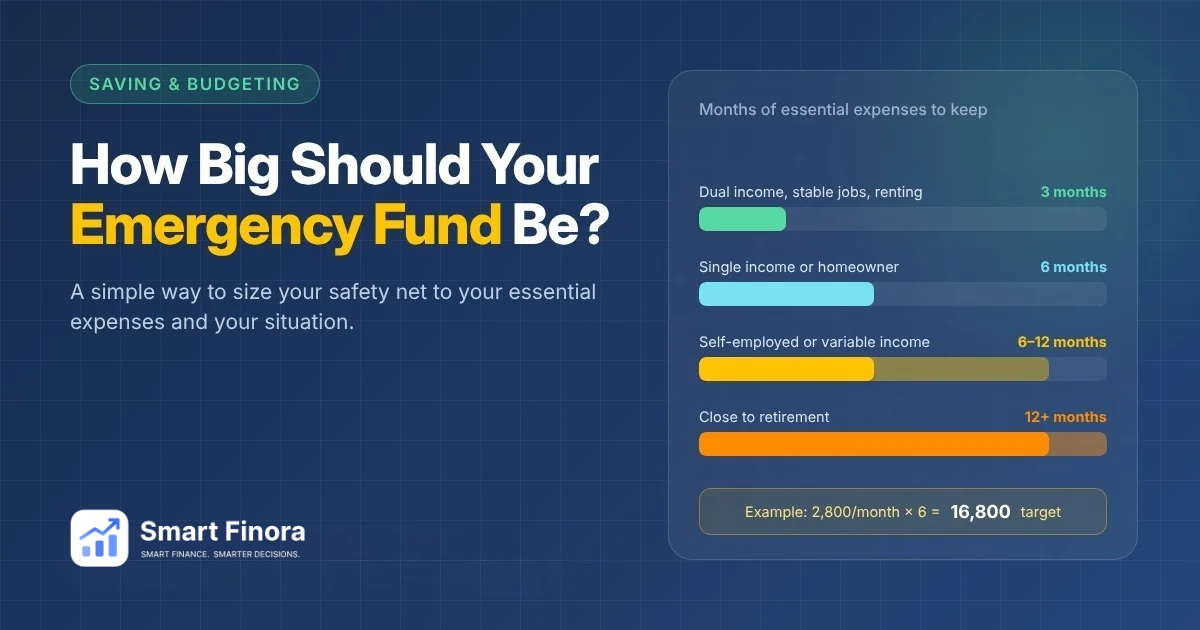
How to size an emergency fund based on your essential expenses and job security, where to keep it, and how to build it step by step without stalling other goals.
3 min read
An emergency fund covers essential costs if you lose income or face an unexpected bill. Enter your essential monthly expenses and how many months you want to cover to find your target — and how long it will take to get there.
$15,000
Target = Essential monthly expenses × Months of cover
The target is based on essential spending only, because in an emergency you can usually cut discretionary costs. Interest earned on the fund is ignored, which keeps the estimate slightly conservative.
With essential costs of $2,000 a month, six months of cover means a target of $12,000. Having $2,000 saved leaves $10,000 to go — about 1 year 8 months at $500 a month.
Three to six months is a common guideline. Consider more if you are self-employed, a single earner, work in a volatile industry, or have dependants.
Somewhere safe and easy to access, such as a high-yield savings account. Avoid investments that can fall in value just when you need the money.
Many people build a small starter fund first so that a surprise bill does not go on a credit card, then focus on high-interest debt, then finish the full fund.
Saving & Budgeting
How to size an emergency fund based on your essential expenses and job security, where to keep it, and how to build it step by step without stalling other goals.
3 min read
Income & Lifestyle
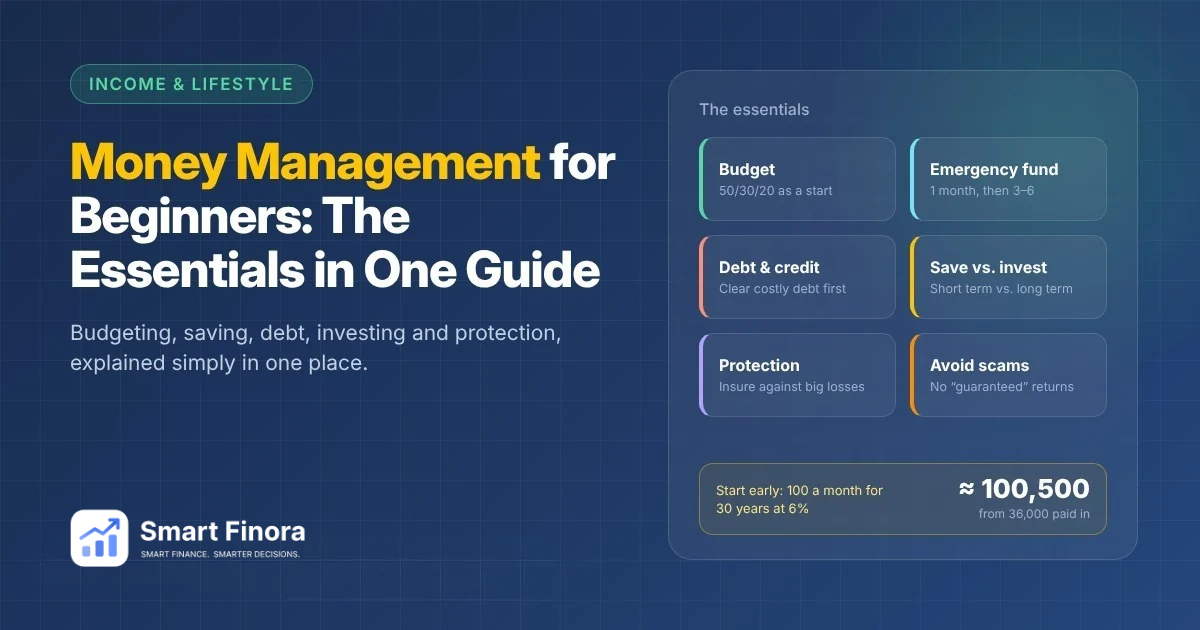
A beginner’s guide to managing money: the right order of priorities, budgeting, emergency funds, debt, credit, investing basics, insurance and avoiding scams.
3 min read
Insurance & Protection
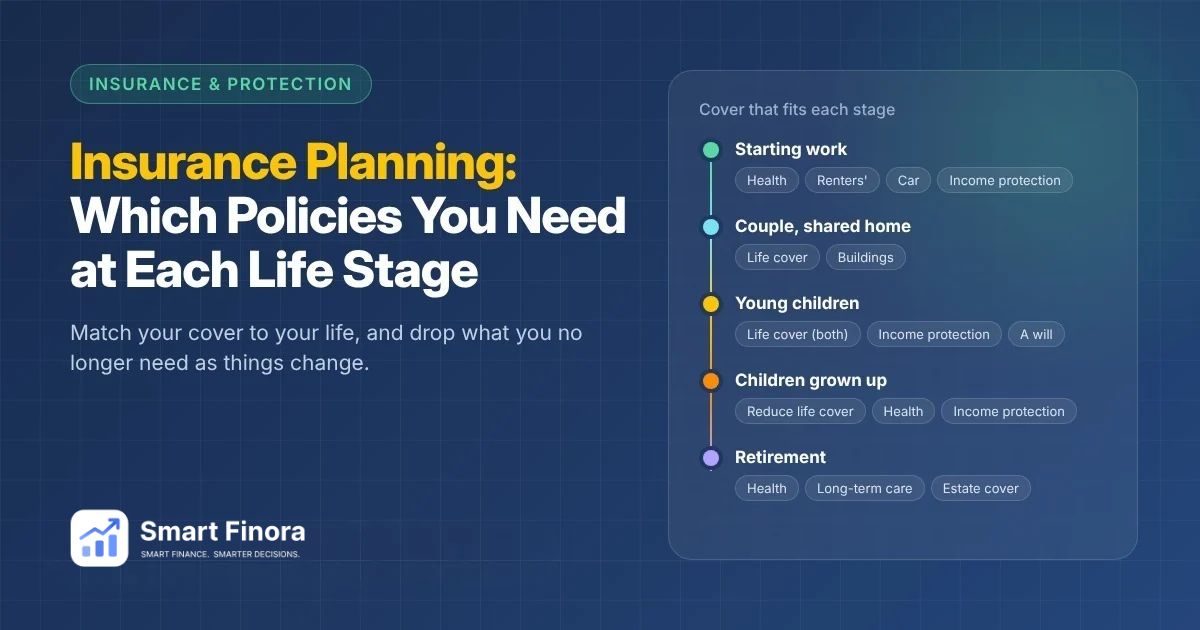
A simple framework for insurance planning: insure what you can’t afford to lose, set priorities by life stage, avoid overlapping cover and review yearly.
2 min read