Personal Finance
Understanding Inflation and Its Effect on Your Savings
What inflation is, how it quietly erodes the value of cash, the difference between nominal and real returns, and practical ways to protect your savings.
3 min read
Inflation means money buys less over time. Use this calculator to see what something costing a given amount today might cost in the future, or what a future sum is worth in today’s money, at an average inflation rate you choose.
$1,343.92
Swipe the table sideways to see every column.
| Year | Cost |
|---|---|
| 0 | $1,000.00 |
| 1 | $1,030.00 |
| 2 | $1,060.90 |
| 3 | $1,092.73 |
| 4 | $1,125.51 |
| 5 | $1,159.27 |
| 6 | $1,194.05 |
| 7 | $1,229.87 |
| 8 | $1,266.77 |
| 9 | $1,304.77 |
Future cost = Amount × (1 + i)ⁿ. Today’s value = Amount ÷ (1 + i)ⁿ
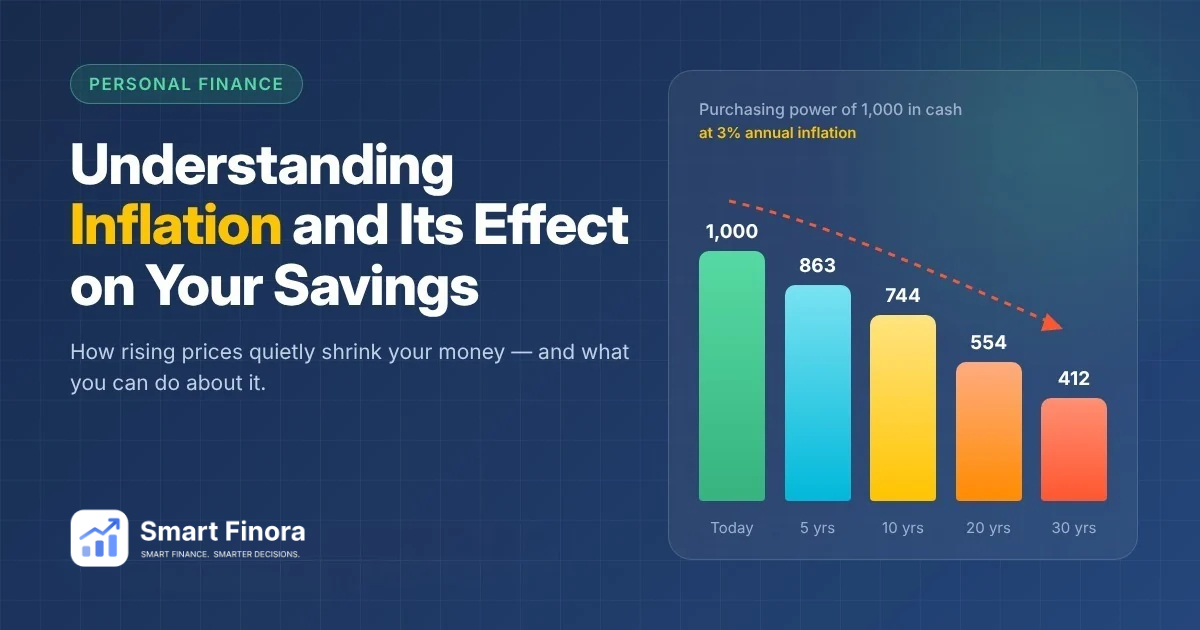
Inflation compounds just like interest. At 3% a year, prices rise by about 34% over 10 years, so the same money buys roughly a quarter less.
At 3% average inflation, something that costs $1,000 today would cost about $1,343.92 in 10 years. Put the other way, $1,000 would buy 25.59% less.
Many central banks target about 2% a year, but actual inflation has often been higher. For planning, test a few rates. Official statistics agencies publish historical figures.
If your savings earn less interest than the inflation rate, their real value falls even though the balance grows.
Negative inflation (deflation) means prices are falling. You can enter a negative rate to model it.
Personal Finance
What inflation is, how it quietly erodes the value of cash, the difference between nominal and real returns, and practical ways to protect your savings.
3 min read
Retirement Planning
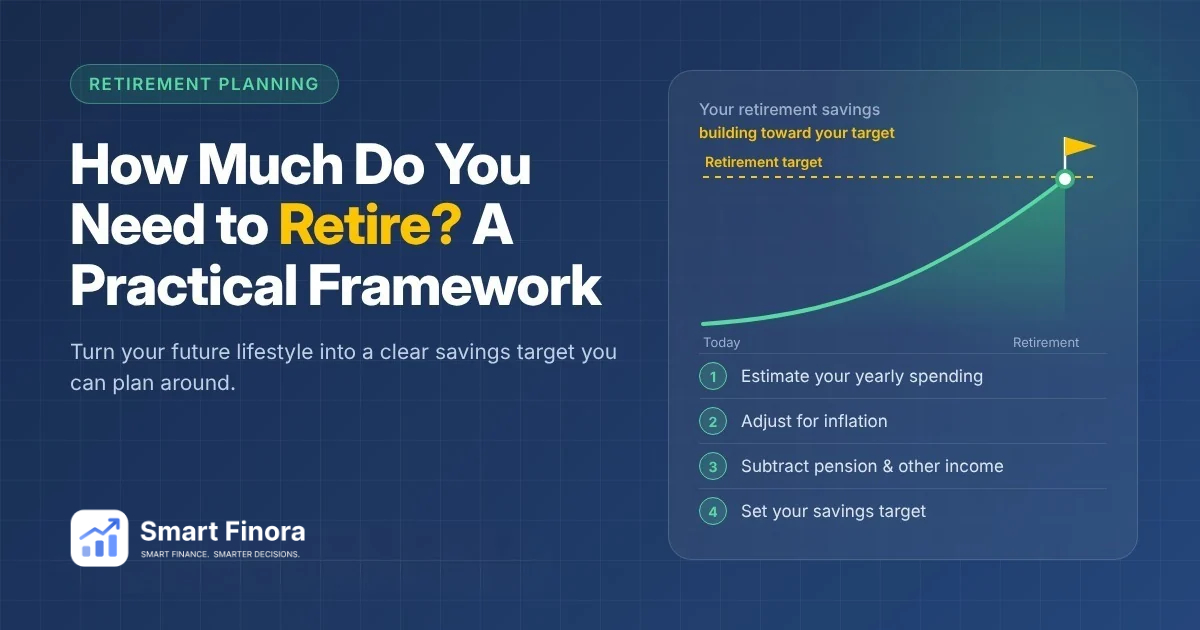
A step-by-step way to estimate your retirement number: target income, pensions, the 4% rule, inflation and what to do if your projection falls short.
3 min read
Financial Planning
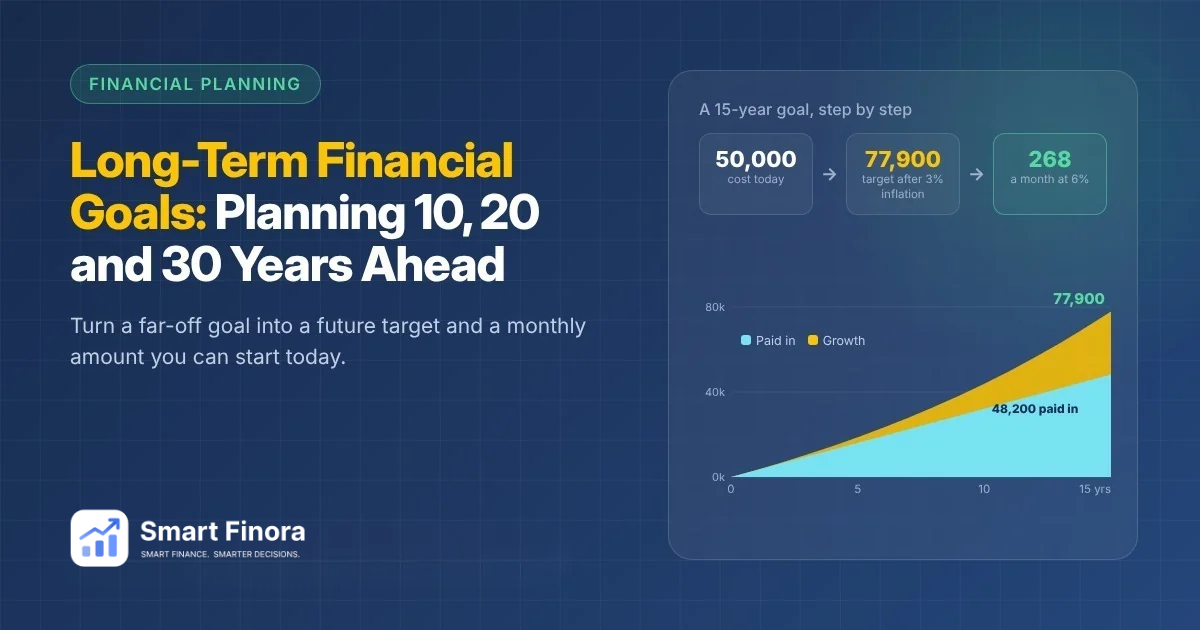
How to set and fund long-term financial goals such as retirement, a home or education: adjust for inflation, work out the monthly saving and review.
2 min read