How to Build a Monthly Budget You’ll Actually Stick To
A practical, step-by-step method for building a monthly budget: track real spending, choose a framework like 50/30/20, and keep it going without burning out.

Most budgets fail for the same reason: they describe the life we wish we had rather than the one we actually live. A useful budget starts from real numbers, gives every unit of income a purpose, and is simple enough to keep up month after month. This guide walks through a method that works whether you earn dollars, pounds, euros or rupees.
Step 1: Start with your take-home pay
Budget from what actually reaches your bank account, not your headline salary. Taxes, social security contributions and retirement deductions are taken out before you can spend anything, so your net pay is the number that matters.
If your income varies — freelance work, commission or shift pay — use the average of your lowest three months from the past year. Budgeting on a cautious figure means a good month becomes a bonus rather than a lifeline. If you are not sure what your net pay will be after a raise or a new job, the Gross to Net Salary Calculator gives an estimate for the US, UK and India.
Step 2: Track what you really spend
Before you set any limits, look back. Download the last two or three months of bank and card statements and sort each transaction into a category. This takes an hour or two and is the most valuable part of the whole exercise, because people routinely underestimate small, frequent costs such as takeaway coffee, delivery fees and subscriptions.
Use a handful of broad categories rather than dozens of narrow ones:
- Housing: rent or mortgage, property tax, maintenance
- Utilities: electricity, water, internet, phone
- Food: groceries (keep dining out separate)
- Transport: fuel, public transport, car insurance, servicing
- Insurance and health: premiums, prescriptions
- Debt: minimum payments on loans and cards
- Lifestyle: dining out, entertainment, shopping, hobbies, subscriptions
- Savings: emergency fund, investments, extra debt payments
Step 3: Choose a budgeting framework
A framework turns a list of numbers into decisions. Three approaches work well for most people:
The 50/30/20 rule
Popularised by US Senator Elizabeth Warren in her book All Your Worth, this splits take-home pay into roughly 50% for needs, 30% for wants and 20% for savings and paying down debt beyond the minimum. It is simple and flexible, which is why it is a good starting point. In high-cost cities, needs often take more than half of income — that is a signal to protect your savings rate by trimming wants, not a reason to abandon the budget.
Zero-based budgeting
Here you assign every unit of income a job until income minus planned spending and saving equals zero. It takes more effort but gives the most control, and it works especially well if money tends to “disappear” at the end of the month.
Pay yourself first
If detailed tracking isn’t for you, automate a fixed transfer to savings on payday and spend the rest freely. You lose visibility over where money goes, but you guarantee the most important outcome.
| Framework | Effort | Best for |
|---|---|---|
| 50/30/20 | Low | Beginners and anyone who wants a quick health check |
| Zero-based | High | Tight budgets, paying off debt, irregular income |
| Pay yourself first | Very low | People who dislike tracking but want to save reliably |
A worked example
Imagine take-home pay of 4,000 a month (the currency doesn’t matter). Tracking shows housing 1,300, utilities 200, groceries 400, transport 200 and insurance 100 — needs of 2,200, or 55% of income. Wants come to 550 (about 14%) and current saving is 600 (15%).
Example
What the numbers say
Needs are slightly above the 50% guideline, wants are well below 30%, and 650 is unallocated each month. Directing that 650 to savings would lift the savings rate to about 31% — far above the 20% target — without cutting anything. The money was already there; it simply had no job.
You can run your own numbers through the Budget Calculator, which compares each group against the 50/30/20 guideline and shows what is left over.
Step 4: Make it stick
- Automate the important things. Schedule transfers to savings and bill payments for the day after payday.
- Use separate accounts. Keeping bills, spending and savings apart makes overspending visible immediately.
- Review monthly, not daily. A 15-minute review once a month is sustainable; checking every purchase usually isn’t.
- Build in fun money. A budget with zero room for enjoyment will be abandoned. A modest, guilt-free amount keeps you on track.
- Adjust instead of quitting. If a category is consistently over, change the plan. A budget is a tool, not a test.
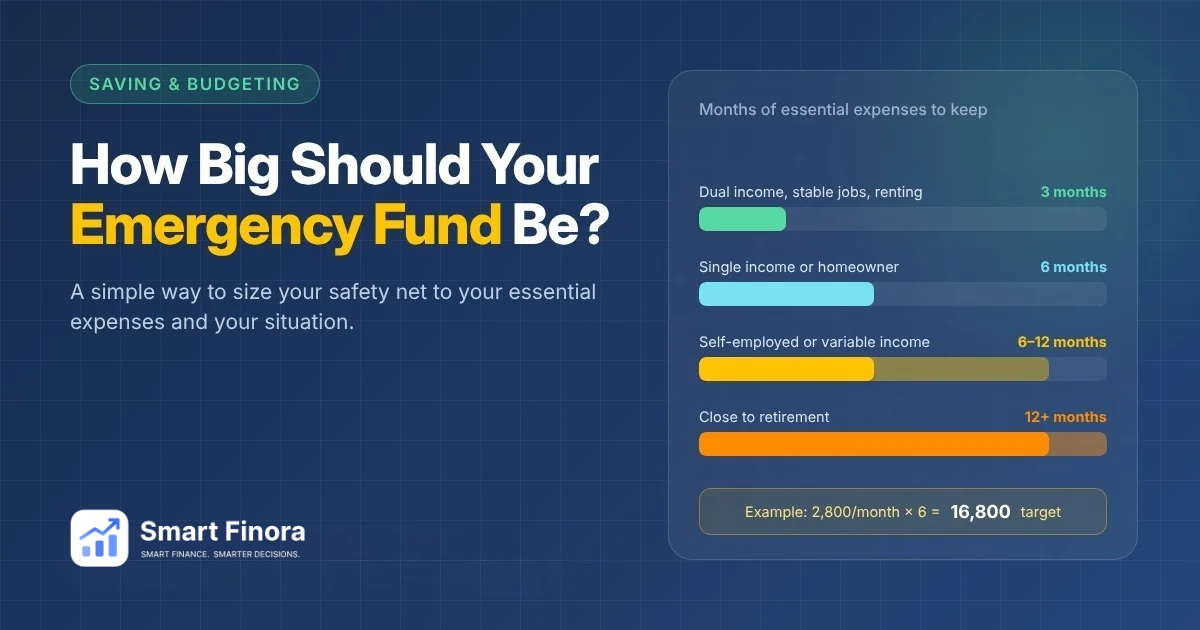
Once your budget is stable, the next priority for most people is an emergency fund — see our guide on how big your emergency fund should be.
Related calculators
Frequently asked questions
What percentage of income should go to rent?
A common guideline is no more than about 30% of gross income, which fits within the 50% “needs” share of take-home pay in a 50/30/20 budget. In expensive cities this is often hard to achieve, so focus on keeping your total needs and your savings rate in balance.
Should I budget with gross or net income?
Use net (take-home) income. It is the money you can actually allocate after taxes and payroll deductions.
How long does it take for a budget to feel normal?
Most people need two or three monthly cycles to refine their categories and amounts. Expect the first month to be a learning exercise rather than a perfect plan.
Sources and references
- Consumer tools: budgeting, saving and managing money — Consumer Financial Protection Bureau
- Budgeting and saving guides — MoneyHelper (UK Money and Pensions Service)
- All Your Worth: The Ultimate Lifetime Money Plan — Elizabeth Warren and Amelia Warren Tyagi (Free Press, 2005)
Figures in examples are calculated with Smart Finora’s calculators and rounded. Read how we research and review content in our editorial policy.
Related calculators
Written by
Personal finance writers and editors
The Smart Finora Editorial Team writes and maintains our finance guides. Every guide is researched from primary sources such as government agencies, central banks and regulators, checked against our calculators, and reviewed before publication under our editorial policy.