Skip to content

Loan Payoff Calculator

Paying even a little more than the minimum each month can save a surprising amount of interest. Enter your current balance, rate and payment, then add an extra monthly amount to see your new payoff date and the interest you save.

  • Private — runs in your browser
  • Formula explained

Enter your details

$
%
$
$

Calculated in your browser. Your numbers are never sent or stored.

Time saved

1 year 1 month

Interest saved
$641
Payoff time now
4 years 3 months
Payoff time with extra
3 years 2 months
Total interest now
$2,514
Total interest with extra
$1,873
Balance: current plan vs. with extra payments

Remaining balance by year

Swipe the table sideways to see every column.

YearCurrent planWith extra payment
1$11,817$10,575
2$8,387$5,806
3$4,691$668
4$707$0
5$0$0

How to use the Loan Payoff Calculator

  1. 1Enter your current outstanding balance (from your latest statement).
  2. 2Enter the interest rate and your regular monthly payment.
  3. 3Enter the extra amount you could pay each month.
  4. 4Press Calculate to compare both payoff plans.

Formula

Balanceₜ₊₁ = Balanceₜ × (1 + r) − Payment

r
monthly interest rate = annual rate ÷ 12 ÷ 100
Payment
monthly payment (plus any extra amount)

The calculator simulates the loan month by month: interest is added to the balance and the payment is subtracted, until the balance reaches zero. Running the simulation twice — with and without the extra amount — shows the months and interest saved. The payment must be larger than the first month’s interest or the loan never ends.

Example calculation

With a $20,000 balance at 8% and a $400 monthly payment, the loan takes 5 years 2 months. Adding $100 a month cuts that to 3 years 11 months and saves $1,070 in interest.

Assumptions and limitations

  • The lender applies extra payments directly to principal with no prepayment penalty.
  • The interest rate stays the same until the loan is repaid.

Frequently asked questions

Is it better to pay extra on a loan or invest?

It depends on the loan rate versus the return you could reasonably expect after tax, and your risk tolerance. Paying off a high-rate loan is a guaranteed “return” equal to its interest rate.

Do all lenders allow extra payments?

Most do, but some loans have prepayment penalties. Check your loan agreement and ask the lender to apply extra amounts to principal.

Which debt should I pay off first?

The “avalanche” method targets the highest interest rate first and saves the most money. The “snowball” method targets the smallest balance first for quick wins.

Learn more

Debt & Credit Management

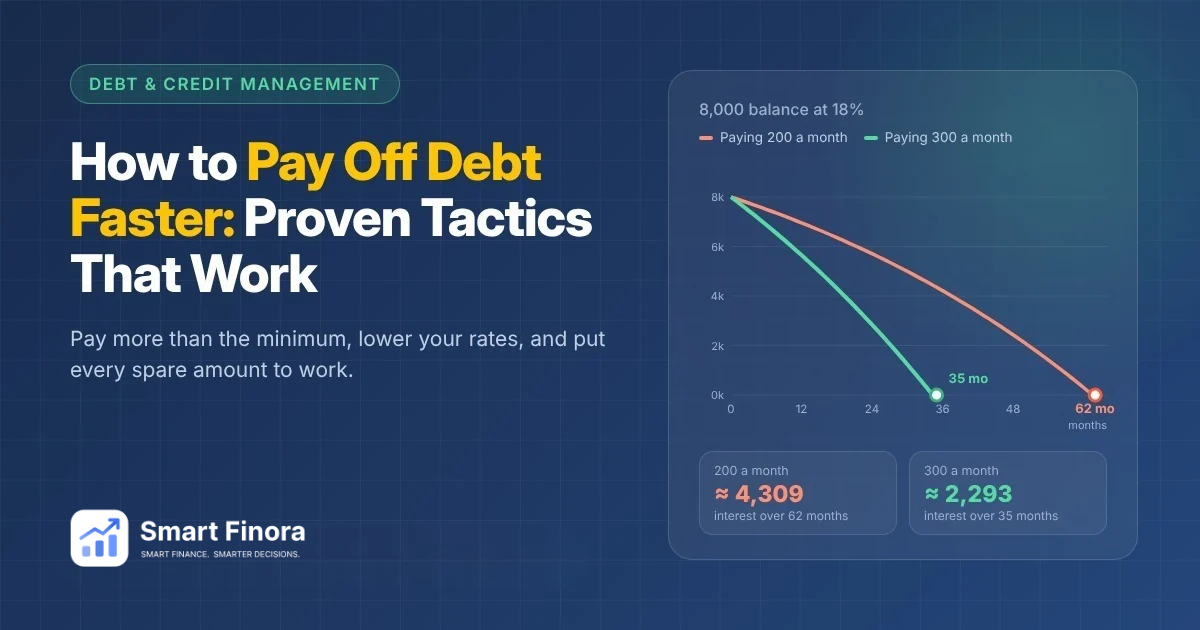
How to Pay Off Debt Faster: Proven Tactics That Work

Practical ways to pay off debt faster: pay more than the minimum, choose a payoff method, lower your interest rates, use windfalls and stop new borrowing.

3 min read