Building Healthy Financial Habits That Last
How to build financial habits that stick: start small, automate, use weekly, monthly and yearly money check-ins, and the habits that matter most.
Good finances are built from small actions repeated for years. The people who seem effortlessly good with money have usually just made the right things automatic and the wrong things slightly harder. Here is how to build habits that last.
How to make a habit stick
- Start small. A habit you can keep on your worst week beats an ambitious one you drop.
- Attach it to something you already do, such as a money check-in every Sunday after breakfast.
- Automate wherever possible, so the habit happens without a decision.
- Make progress visible — a savings balance, a debt total falling, a net worth chart.
- Expect setbacks. Missing once does not matter; restarting quickly does.
A simple money routine
Weekly — 10 minutes
Check your balances and recent transactions, look at what is left in your spending categories, and note any upcoming bills.
Monthly — 30 minutes
Review spending against your budget, move money to savings goals and sinking funds, and pick one improvement for next month.
Yearly — an afternoon
Calculate your net worth, review insurance and subscriptions, update goals, check your retirement contributions and compare savings rates.
The habits that matter most
- Pay yourself first with an automatic transfer on payday.
- Spend less than you earn, every month.
- Pay credit cards in full, or have a plan to clear them.
- Keep an emergency fund and refill it after using it.
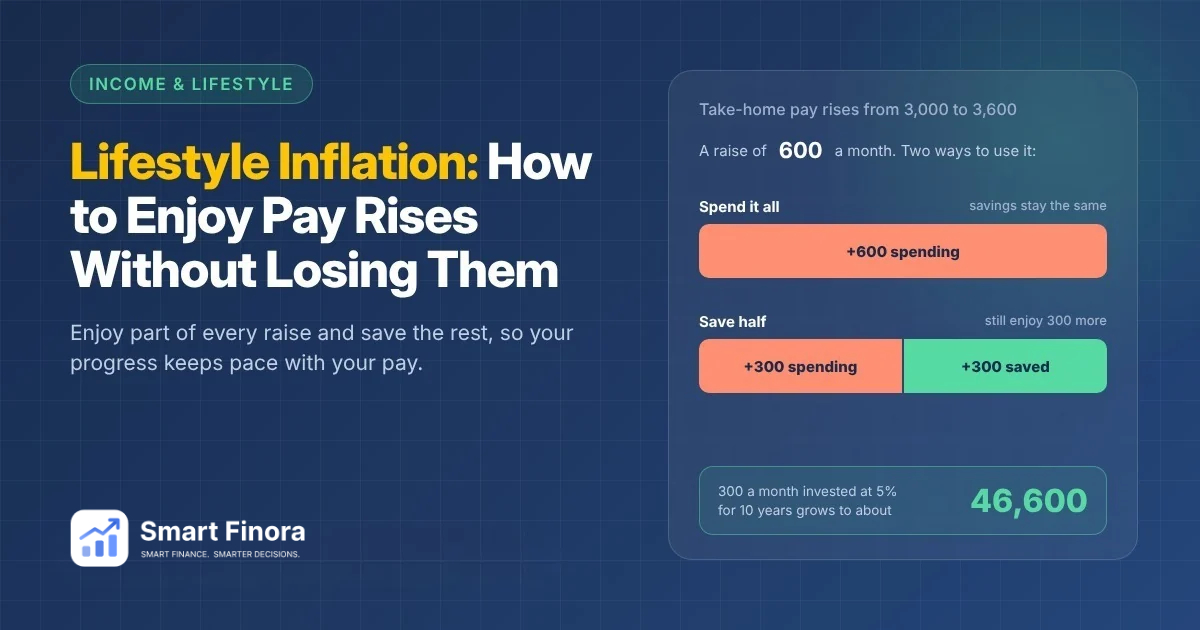
- Increase savings with every pay rise.
- Review recurring costs at every renewal.
- Wait before big non-essential purchases.
- Track net worth once or twice a year.
- Keep learning — one article or book a month adds up.
Example
The power of small increases
Raising your savings rate by just 1 percentage point every six months takes you from 5% to 15% in five years. Each step is too small to notice in your daily budget, but the end result triples what you save.
Design your environment
Make good choices easy and impulsive ones slightly harder: unsubscribe from shopping emails, remove saved cards from shopping apps, keep savings at a separate bank, and turn on alerts for low balances and large purchases.
Common mistakes
- Trying to change everything at once, then giving up.
- Relying on willpower instead of automation.
- Checking accounts obsessively, which causes stress without improving decisions.
- Abandoning a habit after one slip.
- Never reviewing whether a habit still serves your goals.
Related calculators
Frequently asked questions
What is the most important financial habit?
Spending less than you earn and saving the difference automatically. Most other habits build on that one.
How long does it take to build a financial habit?
It varies by person and habit. Expect a few months of conscious effort before a routine feels automatic.
How can couples build habits together?
Hold a short monthly money date to review the budget and goals, and automate shared savings so progress happens even in busy months.
Sources and references
- Consumer tools for building financial skills — Consumer Financial Protection Bureau (US)
- Money management guidance — Financial Consumer Agency of Canada
Figures in examples are calculated with Smart Finora’s calculators and rounded. Read how we research and review content in our editorial policy.
Related calculators
Written by
Calculator methodology and tax rules
The Smart Finora Research Desk builds and tests the formulas behind our calculators, maintains the country-specific tax tables, and reviews them whenever official rates change. Each calculator documents its formula, assumptions and the date its rules were last reviewed.