Expense Management: How to Track, Sort and Reduce Your Spending
A practical system for managing personal expenses: choose a tracking method, separate fixed, variable and irregular costs, and cut spending where it counts.
Most people know their rent to the penny but have only a rough idea of what they spend on food, transport or online shopping. Expense management closes that gap. It is less about recording every coffee forever and more about understanding your patterns well enough to make a few good decisions.
Pick a tracking method you will actually use
The best system is the one you keep using after the first enthusiastic week. Each option has trade-offs:
Your banking app
Many banks categorise spending automatically. It takes no effort, but categories are often wrong and cash or transfers get missed. Good for a quick monthly overview.
A spreadsheet
Download statements once a month and sort them yourself. Slower, but you see every transaction and can design categories that suit your life.
Pots or envelopes
Move money for each category into separate pots — digital or cash envelopes — at the start of the month. You track by watching balances fall rather than adding up receipts.
Fixed, variable and irregular expenses
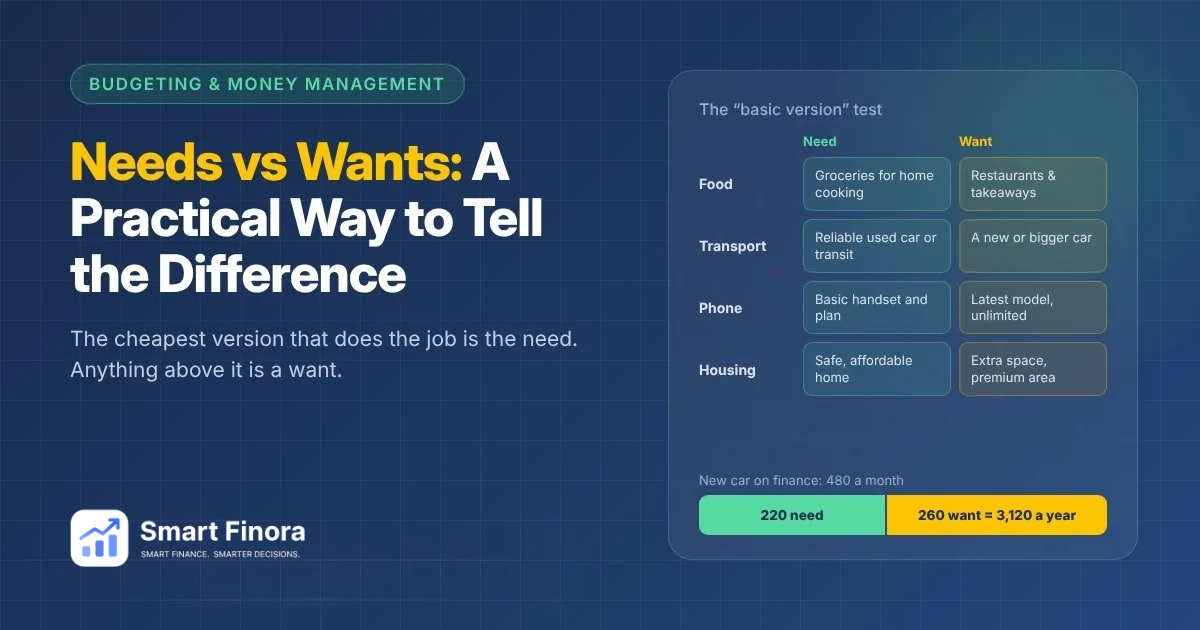
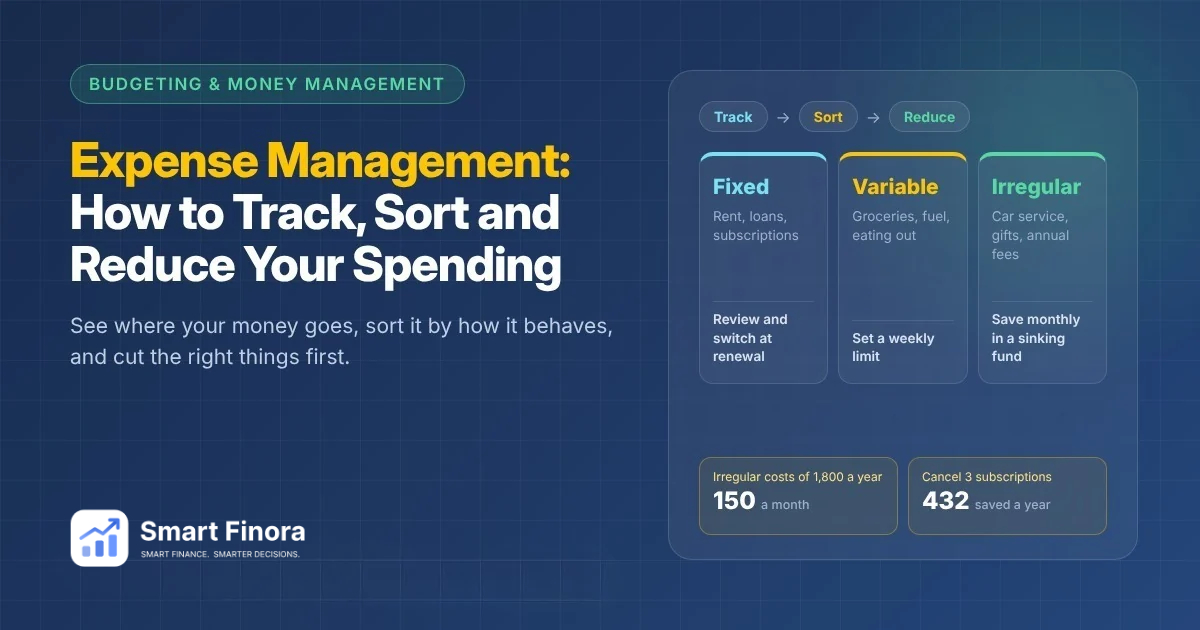
Sorting expenses by how they behave tells you how to manage each one.
| Type | Examples | How to manage it |
|---|---|---|
| Fixed | Rent, loan payments, subscriptions, insurance paid monthly | Review at renewal; negotiate or switch |
| Variable | Groceries, fuel, eating out, entertainment | Set a weekly limit and watch it |
| Irregular | Car servicing, annual fees, gifts, school costs | Save a monthly amount in a sinking fund |
Example
Turning irregular costs into a monthly figure
Car insurance of 720 a year, a 360 car service, 600 of birthday and festival gifts and 120 of annual subscriptions add up to 1,800 a year. Setting aside 150 a month in a separate pot means none of these bills ever lands on a credit card.
Irregular costs are where most budgets break. Add yours to the Monthly Expense Calculator to see your true monthly cost of living.
The 30-minute monthly review
- Download last month’s bank and card statements.
- Sort transactions into your categories — fixed, variable and irregular, or whatever groups you use.
- Compare each category with your budget and note the biggest gap.
- Choose one leak to fix next month, not five.
- Set next month’s limits and move money into pots or sinking funds.
Cutting expenses where it counts
Start with costs that recur automatically, because one change keeps saving money every month. Unused subscriptions are the classic example: cancelling three services at 12, 15 and 9 a month saves 36 a month, or 432 a year, for ten minutes of effort.
Next, look at the big three — housing, transport and food — which usually make up most of a household’s spending. A cheaper phone plan saves a little; a cheaper commute or a renegotiated rent can save far more. Daily habits come last: they matter, but they demand willpower every single day.
Common mistakes
- Tracking in too much detail. Twenty categories become a chore. Eight to twelve is plenty.
- Missing cash, transfers and digital wallets. Spending that bypasses your main account is often the spending you most need to see.
- No plan for irregular costs. Without sinking funds, every annual bill feels like an emergency.
- Cutting everything you enjoy. A budget with no room for fun rarely survives. Cut what you value least, not everything at once.
- Reviewing once a year. By then the pattern has cost you twelve months of money.
Related calculators
Frequently asked questions
How long should I track expenses?
Track closely for two or three months to learn your patterns. After that, a monthly review of category totals is usually enough.
What categories should I use?
Start with housing, utilities, groceries, transport, insurance, debt payments, eating out, shopping, subscriptions, irregular costs and savings. Merge or split categories as you learn what matters for you.
Is it worth using a budgeting app?
Apps help if they connect to your accounts reliably and you check them regularly. A simple spreadsheet reviewed monthly works just as well for many people.
Sources and references
- Consumer tools: budgeting and spending — Consumer Financial Protection Bureau (US)
- Money management guidance — Financial Consumer Agency of Canada
Figures in examples are calculated with Smart Finora’s calculators and rounded. Read how we research and review content in our editorial policy.
Related calculators
Written by
Calculator methodology and tax rules
The Smart Finora Research Desk builds and tests the formulas behind our calculators, maintains the country-specific tax tables, and reviews them whenever official rates change. Each calculator documents its formula, assumptions and the date its rules were last reviewed.