Needs vs Wants: A Practical Way to Tell the Difference
How to tell needs from wants when budgeting, with a simple test for grey areas, five questions to ask before buying, and why wants still deserve a place.
Almost every budgeting method asks you to separate needs from wants, and almost everyone finds the line blurry. Is a car a need? Is a gym membership? The honest answer is often “part of it”. This guide gives you a practical way to decide — and explains why wants are not the enemy.
What counts as a need
A need is something required for your health, safety, ability to earn an income, or legal obligations: housing, food, utilities, essential transport, basic clothing, healthcare, required insurance and minimum debt payments.
A want makes life more comfortable or enjoyable but is not required. If you stopped paying for it tomorrow, your life would be less pleasant, but you could still live safely and keep working.
The “basic version” test for grey areas
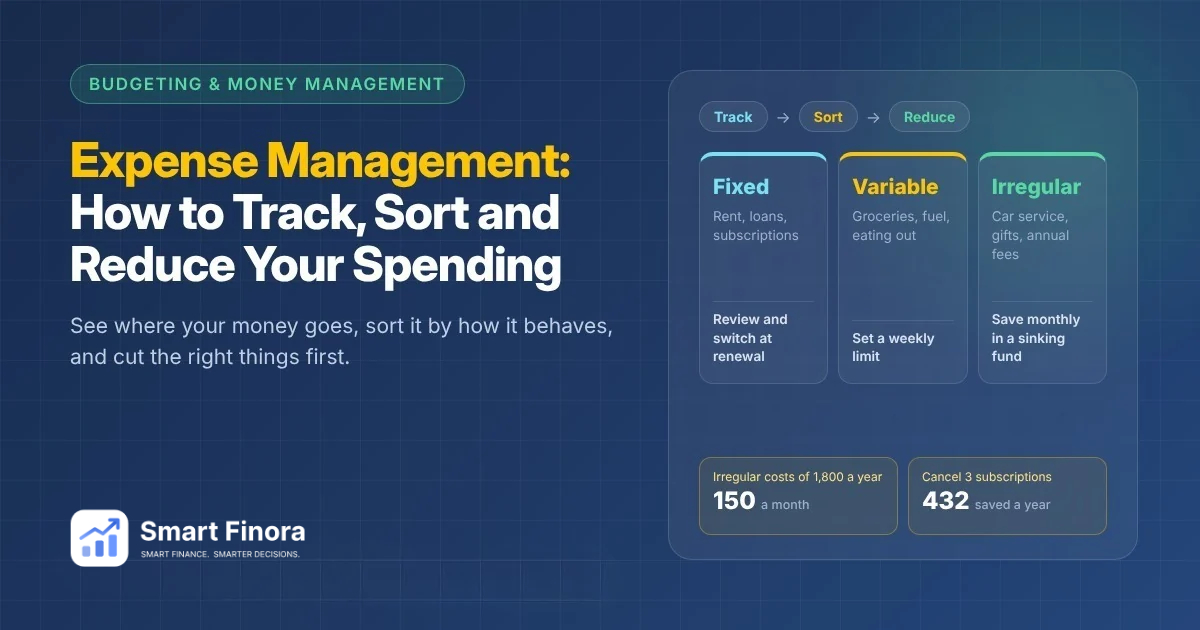
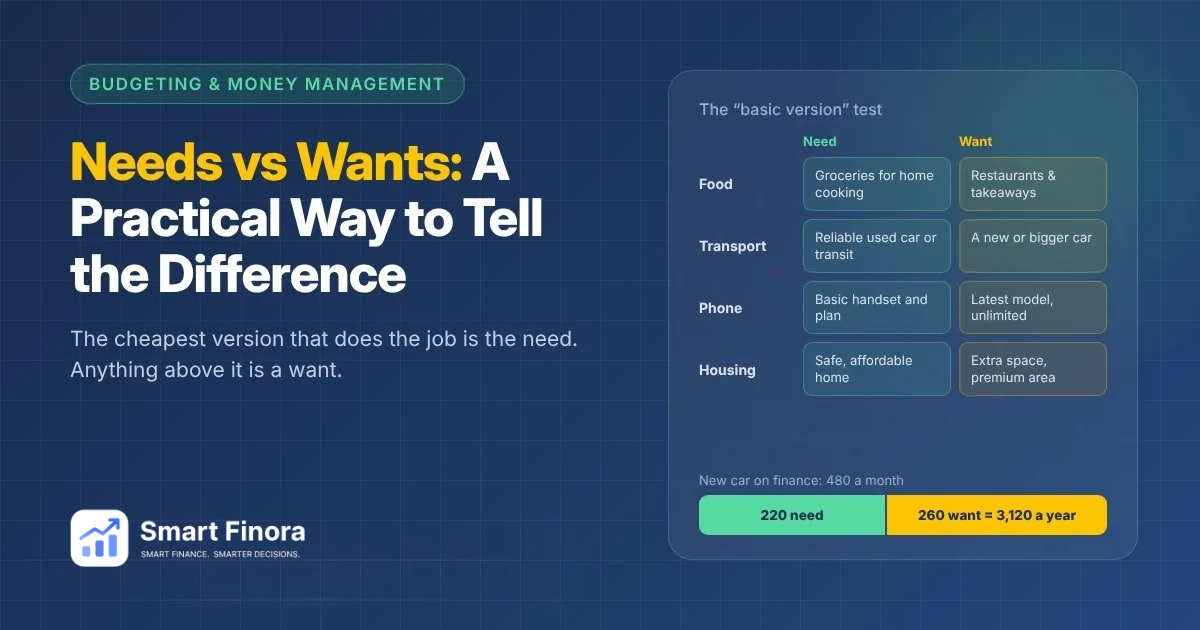
Most real spending mixes the two. The simplest way to split it: the cheapest version that does the job is the need; anything above that is the want.
| Spending | Need (basic version) | Want (upgrade) |
|---|---|---|
| Housing | A safe home you can afford | Extra space, a premium location |
| Food | Groceries for home-cooked meals | Restaurants, takeaways, premium brands |
| Transport | Public transport or a reliable used car | A new car, a bigger model |
| Phone | A basic handset and plan | The latest model, unlimited everything |
| Clothing | Clothes for work and the weather | Fashion and extras |
Example
Splitting a car payment
A new car costs 480 a month in finance. A reliable used car that would get you to work costs about 220. In a budget, 220 is the need and the remaining 260 is a want — 3,120 a year. You may still decide the new car is worth it, but now it is a clear choice rather than an unexamined “need”.
Five questions to ask before you buy
- What would happen if I didn’t buy this?
- Is there a cheaper version that does the same job?
- Would I buy it today if I had to pay in cash?
- Will I still be glad I bought it in a month?
- Does it fit in this month’s wants budget?
Why wants deserve a place in your budget
A budget that treats every want as a failure tends to collapse in a spending binge. Planned wants — a set amount for eating out, hobbies or travel — make the rest of the plan sustainable. The goal is not to eliminate wants but to choose the ones that matter most to you and drop the ones you barely notice.
Needs also change. A second car may become a need when a child starts school across town; a home office may become a need when you start working remotely. Review the line once a year rather than fixing it forever.
Common mistakes
- Labelling upgrades as needs. Only the basic version is the need.
- Cutting every want at once. Strict budgets rarely last; trim the wants you value least first.
- Confusing urgent with necessary. A limited-time sale feels urgent, but it does not make the item a need.
- Ignoring small recurring wants. Several small subscriptions can cost as much as one big treat.
- Never revisiting the list. Life changes, and so do your needs.
Related calculators
Frequently asked questions
Is internet access a need?
For most people today, yes — a basic plan is often needed for work, school and essential services. A faster or premium plan above what you use is a want.
Are savings a need or a want?
Neither. In most budgets, savings have their own category so they are not squeezed out by spending. Treat saving like a bill you pay to yourself first.
How do I handle wants in a tight budget?
Set a small, fixed amount for wants — even a modest sum — so you can enjoy something without derailing the plan. Free and low-cost activities help stretch it.
Sources and references
- Budgeting and everyday money guidance — MoneyHelper (UK Money and Pensions Service)
- Consumer advice on spending and saving — Federal Trade Commission (US)
Figures in examples are calculated with Smart Finora’s calculators and rounded. Read how we research and review content in our editorial policy.
Related calculators
Written by
Personal finance writers and editors
The Smart Finora Editorial Team writes and maintains our finance guides. Every guide is researched from primary sources such as government agencies, central banks and regulators, checked against our calculators, and reviewed before publication under our editorial policy.