Saving & Emergency Funds
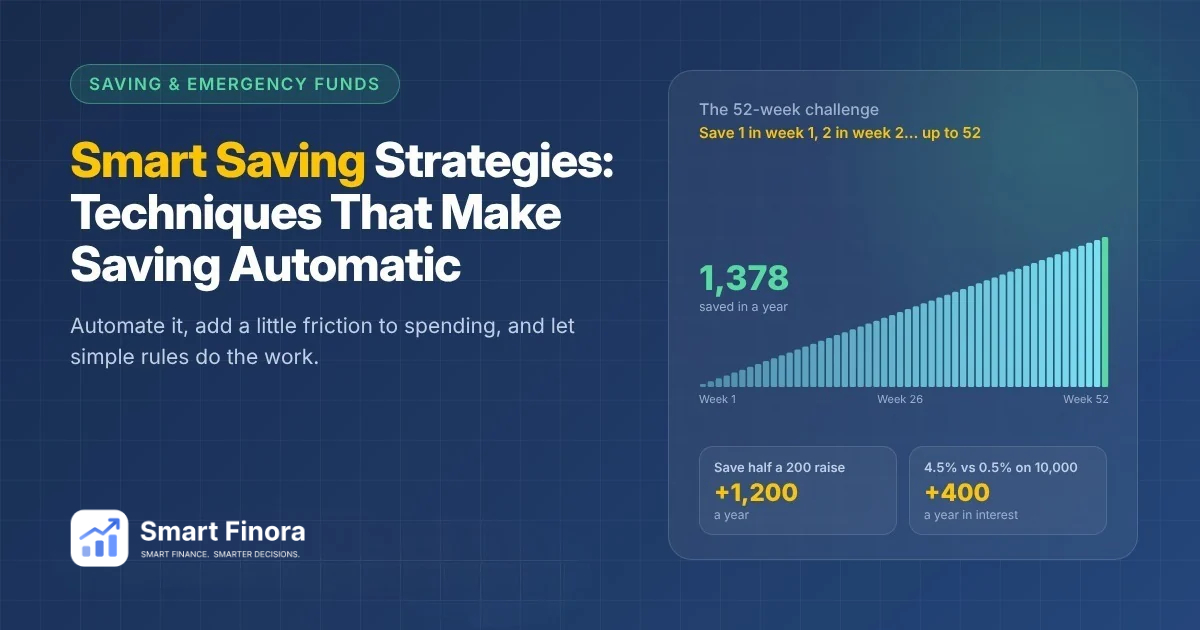
Smart Saving Strategies: Techniques That Make Saving Automatic
Proven saving techniques — automation, friction, saving pay rises, sinking funds, savings challenges and better rates — and how to combine them.
3 min read
A recurring deposit lets you save a fixed amount every month at a fixed interest rate. Enter your monthly deposit, rate and term to see what you will receive at maturity and how much of it is interest.
$9,956
Swipe the table sideways to see every column.
| Year | Deposited | Value |
|---|---|---|
| 1 | $3,000 | $3,107 |
| 2 | $6,000 | $6,421 |
| 3 | $9,000 | $9,956 |
M = Σ R × (1 + r/n)^(n × mₖ / 12)
Each monthly instalment is treated as its own small deposit that compounds until maturity. Adding them together gives the maturity value. This matches the method most banks use for recurring deposits.
Depositing $200 a month for 24 months at 6% (compounded quarterly) means depositing $4,800. At maturity you receive $5,110, including $310 of interest.
An RD offers a fixed, predictable return with low risk. A SIP in market-linked funds may grow more over long periods but its value can fall. Many people use both for different goals.
Banks usually charge a small penalty for late instalments, and repeated misses may close the account. Check your bank’s rules.
In most countries interest is taxable income, sometimes above a tax-free allowance. The results here are before tax, so your actual return may be lower.
Saving & Emergency Funds
Proven saving techniques — automation, friction, saving pay rises, sinking funds, savings challenges and better rates — and how to combine them.
3 min read
Saving & Emergency Funds
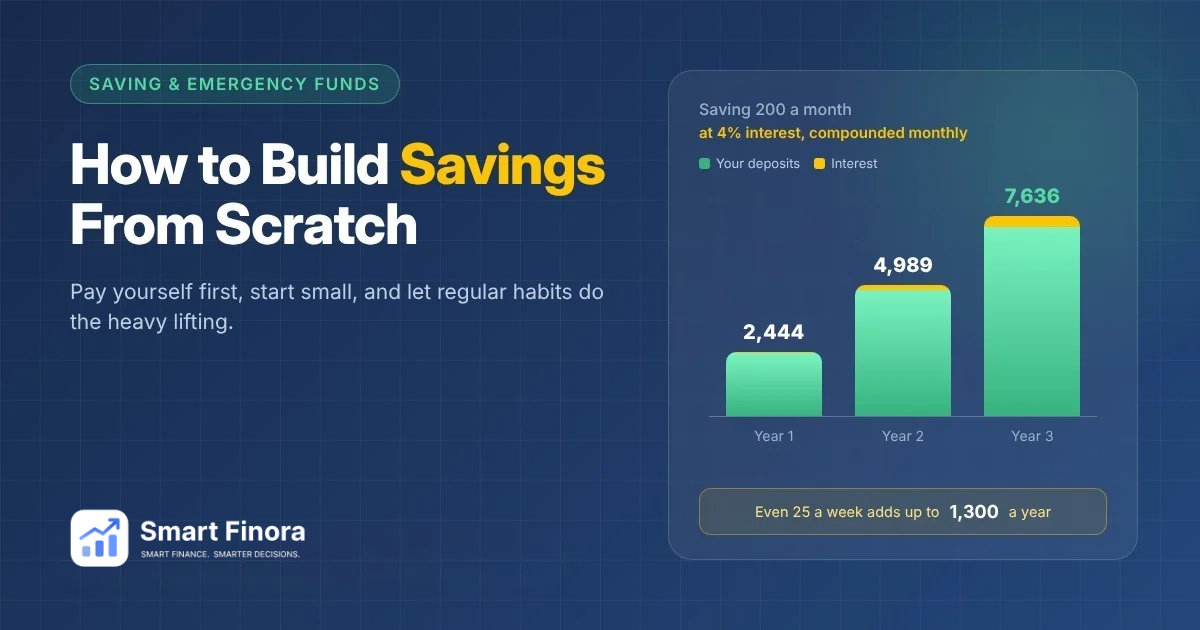
A step-by-step way to start saving when you have little or nothing put aside: pay yourself first, start small, choose the right account and keep going.
3 min read