Insurance & Protection
Term vs Whole Life Insurance: Which Is Right for You?
Term and whole life insurance compared: how each works, what they cost, when permanent cover can make sense, and the “buy term and invest the difference” idea.
3 min read
A Systematic Investment Plan (SIP) means investing a fixed amount every month, typically in a mutual fund or index fund. Enter your monthly amount, expected return and time period to see the projected value, the total you invest, and the growth earned. Add an annual step-up to model raising your contribution each year.
$208,962
Swipe the table sideways to see every column.
| Year | Total invested | Returns | Value |
|---|---|---|---|
| 1 | $6,000 | $335 | $6,335 |
| 2 | $12,000 | $1,334 | $13,334 |
| 3 | $18,000 | $3,065 | $21,065 |
| 4 | $24,000 | $5,606 | $29,606 |
| 5 | $30,000 | $9,041 | $39,041 |
| 6 | $36,000 | $13,464 | $49,464 |
| 7 | $42,000 | $18,979 | $60,979 |
| 8 | $48,000 | $25,700 | $73,700 |
| 9 | $54,000 | $33,752 | $87,752 |
| 10 | $60,000 | $43,276 | $103,276 |
FV = P × [((1 + i)ⁿ − 1) ÷ i] × (1 + i)
Each instalment is invested at the start of the month and compounds monthly until the end of the period. The (1 + i) factor at the end reflects that each payment earns a full month of return. With a step-up, the calculator simulates month by month and raises the instalment at the start of every new year.
Investing $500 every month for 20 years at an assumed 10% annual return means investing $120,000 in total. The projected value is $382,848, so roughly $262,848 comes from compounding.
A SIP is a way of investing a fixed amount at regular intervals, usually monthly. It builds discipline and averages your purchase price over time (often called rupee- or dollar-cost averaging).
No. The calculator assumes a constant rate of return every year. Real investments rise and fall, and past performance does not guarantee future results. Try a conservative rate as well as an optimistic one.
Use a rate that reflects the asset mix and history of what you invest in, and test a lower rate too. Fees and taxes reduce the return you actually keep.
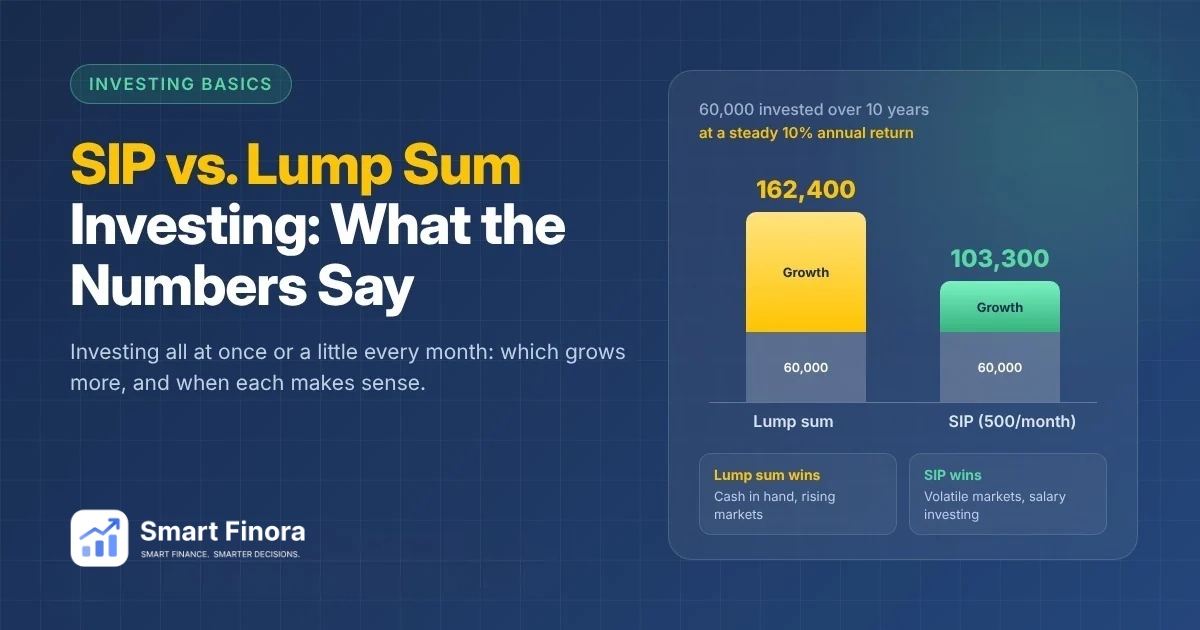
A lump sum invested earlier has more time in the market, while a SIP spreads your entry over time and suits regular income. Our guide on SIP vs. lump sum compares both with numbers.
Term and whole life insurance compared: how each works, what they cost, when permanent cover can make sense, and the “buy term and invest the difference” idea.
3 min read
How to save for a child’s education: estimate future costs with inflation, work out the monthly saving, compare account options by country and balance it with retirement.
3 min read
Investing Basics
Compare investing a lump sum with investing monthly through a SIP. See how each performs in rising and volatile markets and how to choose for your situation.
3 min read