Skip to content

Simple Interest Calculator

Simple interest is charged or earned only on the original principal, never on accumulated interest. It is used for some short-term loans, bonds and savings products. Enter the principal, rate and time to see the interest and the total amount.

  • Private — runs in your browser
  • Formula explained

Enter your details

$
%

Calculated in your browser. Your numbers are never sent or stored.

Interest

$750.00

Total amount (principal + interest)
$5,750.00
Time in years
3
Principal vs. interest

Year-by-year

Swipe the table sideways to see every column.

YearInterest to dateTotal amount
1$250$5,250
2$500$5,500
3$750$5,750

How to use the Simple Interest Calculator

  1. 1Enter the principal.
  2. 2Enter the annual interest rate.
  3. 3Enter the time and choose years, months or days.
  4. 4Press Calculate.

Formula

I = P × r × t

I
interest
P
principal
r
annual interest rate (decimal)
t
time in years (months ÷ 12, or days ÷ 365)

Because interest is never added to the principal, the interest earned each year is the same. The total amount is P + I = P × (1 + r × t).

Example calculation

$5,000 at 6% simple interest for 4 years earns 5000 × 0.06 × 4 = $1,200.00, for a total of $6,200.00.

Assumptions and limitations

  • Days are converted using a 365-day year. Some lenders use 360 days, which gives slightly more interest.

Frequently asked questions

When is simple interest used?

Simple interest is common for short-term personal loans between individuals, some car loans, treasury bills and certain bonds. Most savings accounts and mortgages use compound interest.

Is simple interest better for borrowers?

For the same rate and time, simple interest costs less than compound interest because interest is not charged on interest.

How do I convert months to years?

Divide by 12. For example, 18 months is 1.5 years. The calculator does this for you when you choose “Months”.

Learn more

Investing Basics

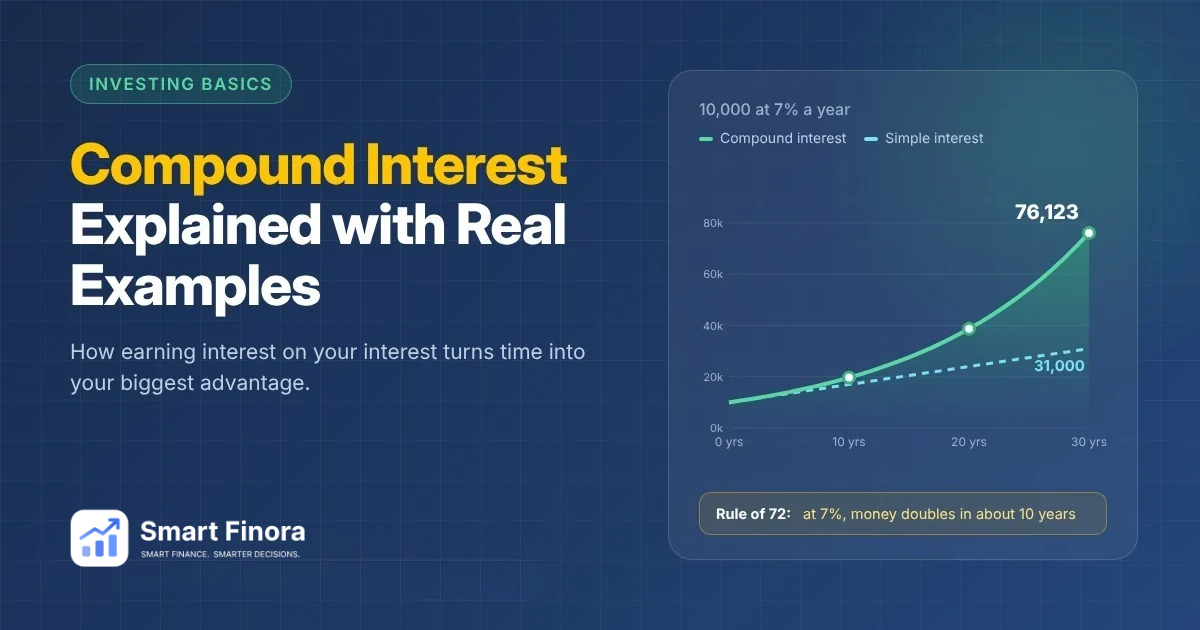
Compound Interest Explained with Real Examples

What compound interest is, how the formula works, why time matters more than the amount you start with, and how compounding works against you on debt.

3 min read